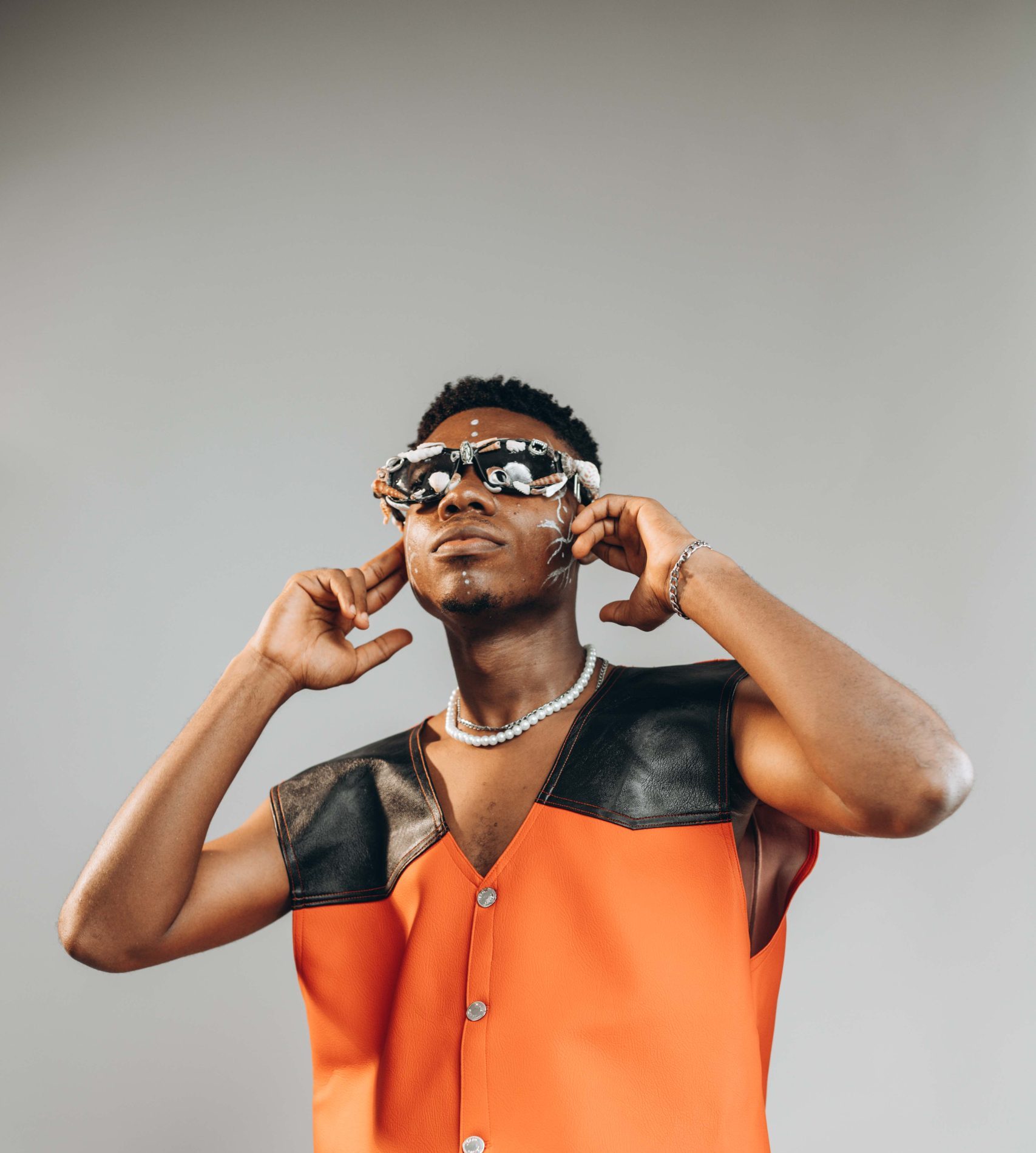
In the ever-evolving landscape of African music, the producer is the unseen architect, the alchemist in the shadows shaping the sounds that define a generation. They are the custodians of rhythm, the designers of mood, and the silent partners to every vocal that captures our collective spirit. Stepping out from behind the boards and into the spotlight is Eyram Gbewonyo, the Ghanaian sonic virtuoso known to the world as Afrolektra.
He is the man credited on records on three of the most seismic Ghanaian albums in 2025: the raw, visceral emotion of Black Sherif‘s “IRON BOY”, the philosophical depth of Omar Sterling’s “Vth 2”, and the intimate, soulful contours of Gyakie‘s “After Midnight”. But who is the architect behind these monumental works?
Afrolektra is more than a hitmaker; he is a storyteller through sound, a trained Biomedical Scientist who approaches his craft with experimental precision. His is a world where the deep-rooted percussion of Ghanaian tradition collides with the futuristic pulse of electronic music, creating a fusion that is as emotionally resonant as it is physically compelling. From his early experiments on Fruity Loops to commanding festival stages at Afrofuture, Outmosphere, iMullar SoundSystem, Manifestivities, and more, his journey is a testament to a new wave of African creativity.
For iMullar, we have a conversation with the sonic Maestro to deconstruct his whirlwind year, explore the duality of his producer-DJ mindset, and understand how he masterfully adapts his signature ‘Afrolektra Sound’ to serve the distinct visions of the continent’s most vital voices.
This interview has been edited for clarity and length.
For the sake of those who don’t know you, can you tell us who Afrolektra is? Who is the man behind the moniker?
Afrolektra is a storyteller through sound. My real name is Eyram Gbewonyo, and I’m a Ghanaian music producer and DJ. I see myself as part of a new generation of African creatives shaping how the world hears our music. I started my journey back in 2010, experimenting with Fruity Loops and Virtual DJ while still in high school. My background in church choirs and marching bands gave me a strong foundation in rhythm and melody, and over the years that evolved into full-time production. Beyond the music, I’m also a trained Biomedical Scientist, which surprises a lot of people. But that scientific precision definitely influences my process. I approach every song like an experiment, searching for that perfect balance between art and structure.
How would you describe the ‘Afrolektra Sound’?
The ‘Afrolektra Sound’ is where African rhythm meets electronic music, and is a blend of the African sound and other genres. It’s rooted in Ghanaian percussion and traditional textures but layered with modern electronic and dance influences. My goal has always been to create music that feels familiar yet futuristic, something that represents who we are culturally while resonating with listeners anywhere in the world. It’s a fusion of warmth, groove, and storytelling. Whether I’m producing for artists like Black Sherif, Gyakie, Omar Sterling, R2Bees, Offei or any other artist, I aim for that emotional core that moves both body and spirit.
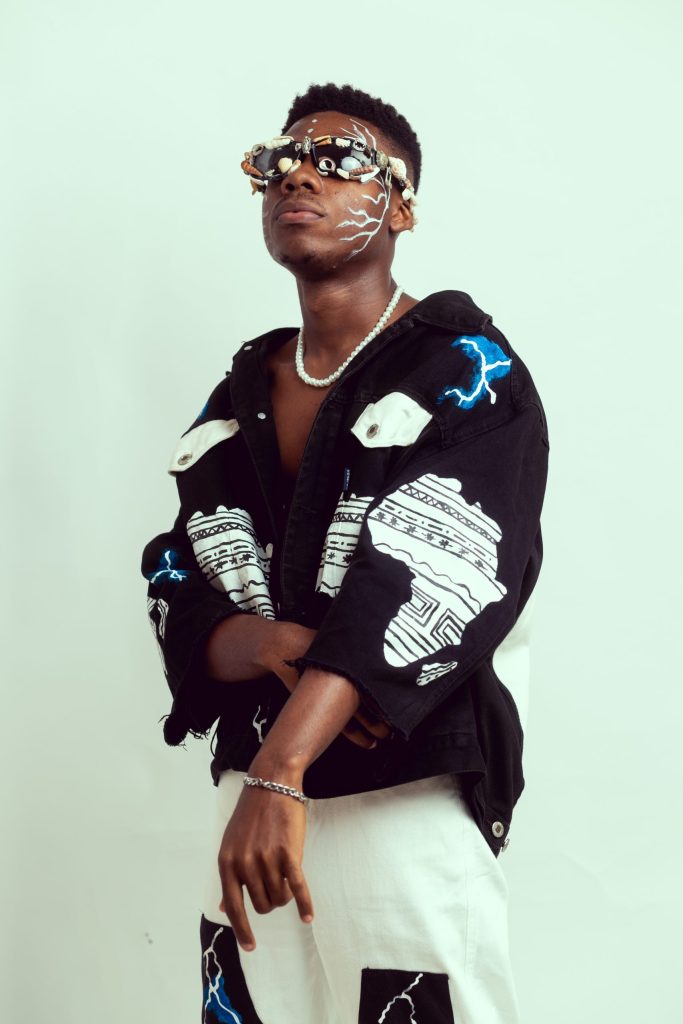
What and who influenced your decision to be a producer?
My earliest influences were the sounds around me. From the drums at church, to the brass bands in my community, to the radio hits that blended highlife with hip-hop, my influences have been diverse, which subconsciously activated my love for fusing sounds, genres and styles. Producers like Da Hammer of the Last 2, Timbaland, Daft Punk and Skrillex also showed me what it means to be a sonic architect defining an entire era through sound. I was always fascinated by how a beat could evoke emotion even before lyrics came in. That curiosity pushed me to learn music production tools (specifically, FL Studio) on my own, and in university, it became clear that music wasn’t just a hobby anymore. It was my God given purpose.
You’re also an accomplished DJ. How does your experience behind the decks influence your work in the studio? Does it give you a better sense of what will move a crowd?
Absolutely. DJing is my laboratory, it’s where I test energy. It’s where I take experimentation to an extreme level, performing mashups and remixes produced both in the studio and on the fly, on stage. When you’re in front of a crowd, you learn quickly what makes people react, whether it’s the groove, the drops, the tension, the release. That real-time feedback feeds also directly into my production. When I’m building a track in the studio, I can already feel how it might live in a festival set or club space. I think of transitions, crowd build-ups, and how to keep energy flowing. Playing at festivals like Afrofuture (Afrochella), Manifestivities, Zaama Disco, IMullar Sound System and ChaleWote Street Art Festival has shaped how I think about pacing and dynamics in my music.
When you’re producing a track, are you already thinking about how it will sound in a DJ set or at a club?
Most times, yes. Even when I’m producing an emotional record, I’m conscious of its movement potential. I’m also mindful of how it would translate when amplified through speakers or surrounded by people. But it’s not just about volume or tempo; it’s about feeling. For example, a song like ‘Rebel Music’ by Black Sherif carries weight beyond the rhythm. It has energy that lives both in headphones and on stage. That’s the sweet spot I aim for: music that connects intimately but also commands space.
How do you balance the technical, detail-oriented mindset of a producer with the more fluid, crowd-reading mindset of a DJ?
It’s a dance between precision and instinct. The producer in me loves structure, layering, EQ, sonic clarity, while the DJ in me thrives on spontaneity and flow. When I’m creating, I allow both sides to exist. I might spend hours perfecting a kick drum frequency, but once I step into a live set, I let go and trust my instincts. At the end of the day, both worlds feed and complement each other, and Afrolektra exists right in that balance. The studio gives me control, and the stage gives me freedom.
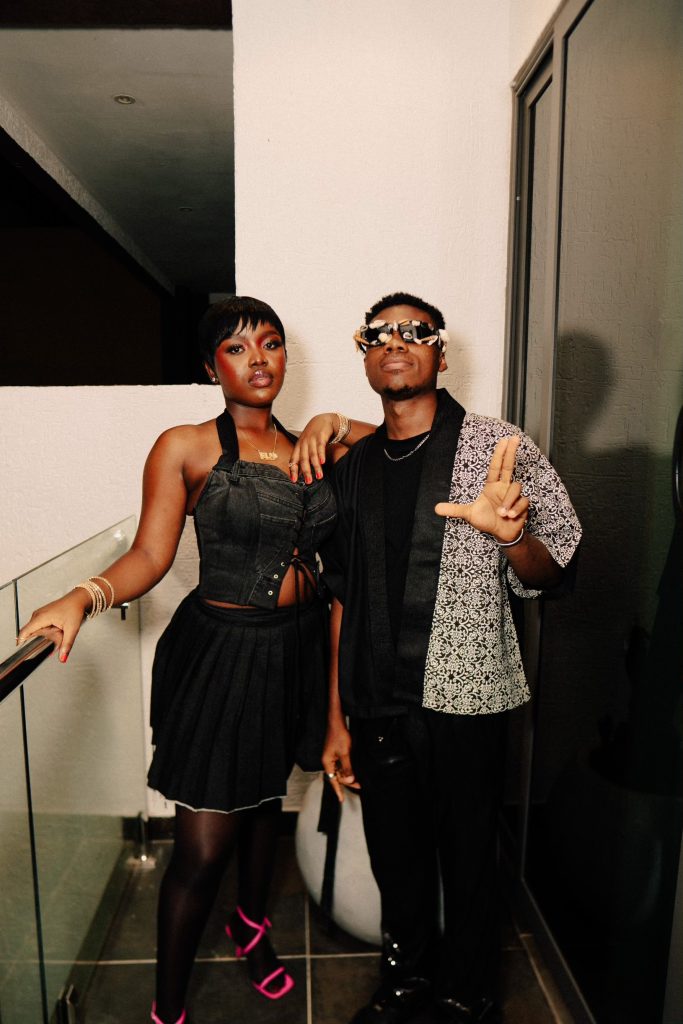
Your name is credited on three of the most talked-about Ghanaian albums in recent times: Black Sherif’s ‘IRON BOY,’ Omar Sterling’s ‘Vth 2,’ and Gyakie’s ‘After Midnight.’ What has this whirlwind period been like for you?
It’s been humbling, honestly. To see three projects I was deeply involved in reach Number 1 on Apple Music Ghana this year still feels surreal. These are artists I respect not just for their talent but for how honest they are in their art. Being part of that creative wave has been a blessing, and it’s pushed me to evolve sonically and spiritually.
Was there a specific track or moment where you felt your career shift into a new gear?
Yes, there was a specific track that marked a major turning point in my career. It was “SITE 15” by R2Bees. The song served as both the lead single and the title track, and it became the perfect introduction for me, officially kickstarting my journey in the music industry. Although it did not bring immediate financial rewards, producing for R2Bees opened many doors for me. I still remember the first time I heard it on mainstream radio. It was an unreal feeling, especially knowing that I did not even have a laptop when I made the beat. From that moment, everything started moving upward. It also gave me a deep sense of belief in my art, because producing a record for legends like R2Bees is no easy feat.
Let’s start with Black Sherif’s ‘REBEL MUSIC.’ The production is raw and emotional. Did you have an idea for creative direction for that project?
It was a very intentional production process. The ideas came from a place of reflection and deep experimentation. The very first idea began in my project studio. I started with a rough drum loop inspired by the energy of a large stadium sound, then layered haunting synths, vocals and textured basslines to match that intensity. The early version of the track had a stripped-down, Kanye-inspired feel, channeling a sense of triumph. Black Sherif immediately connected with the initial idea. From there, we aimed to create something that captured both resilience and pain, which is the kind of duality that defines his journey. His voice naturally carries emotion and truth, so I built a sonic landscape that was not overpowering but still strongly complementary. That simplicity is what gave the record its power. Big respect to Louddaaa, Samsney, Joker Nharnah, and BabaWvd, who each added special elements that helped shape it into the giant record it became.
You’ve worked with Omar Sterling on past records and have built a synergy with him that you understand his artistry and mindset. Did that dynamic differ while working on ‘VTH 2’?
Working with Omar Sterling always feels like a masterclass. He’s more than a rapper, he’s a philosopher in rhythm and life in general. He lives what he writes about, whether past or present. His mindset, perception and life experience has helped shape my life even beyond music. On ‘VTH 2‘, our process was intentional. He wanted a sound that spun around struggle, introspection, identity, and success, all while remaining authentic to his roots. Being a more experienced producer and honing my craft over the past few years, I was able to understand what he needed and how he needed it. We spent long hours just talking before recording, about his experiences, about music, and about spirituality. That energy shaped the project heavily.
Gyakie’s ‘After Midnight‘ has a more intimate, R&B-focused vibe. How did you approach production to complement her soulful voice and vulnerable artistry?
Gyakie is one of my favorite collaborators because she knows exactly what she wants and my job is to elevate those ideas. For ‘After Midnight,’ the goal was intimacy, something that feels like a whisper in your ear. I leaned on more emotional chords, and atmospheric synths to create the perfect mood and complement her vocals. We built every track around her tone, her breath, her pauses, her phrasing. The chemistry was effortless.
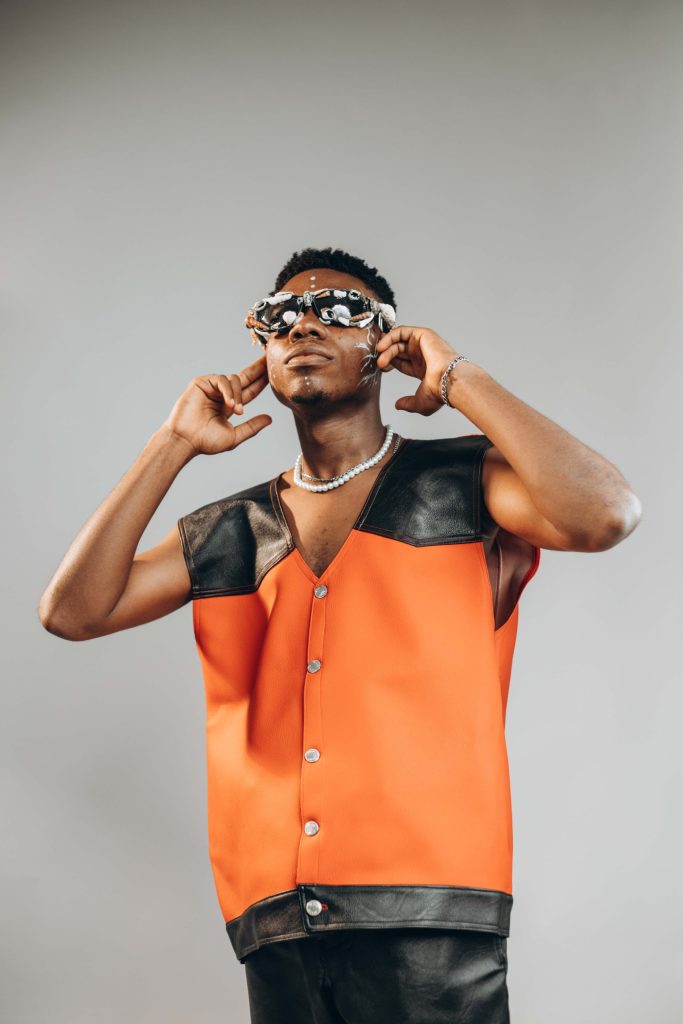
These three artists have very distinct styles. How do you adapt your production process to serve the artist’s vision without losing your own signature touch?
That’s the art of producing, becoming invisible and yet unforgettable. These three artists come from very different times in life, with very different influences and experiences. I approach each artist like a world of their own. With Black Sherif, it’s the raw energy. With Omar Sterling, it’s philosophy. With Gyakie, its emotion. But the Afrolektra fingerprint is always there in fusion, whether in rhythm, melody or arrangement, with electronic depth. Even when I adapt, I’m still very much me, just speaking different dialects of the same language: sound.
What does your current production setup look like? Are there any specific plugins, hardware, or even a particular drum kit that you can’t live without?
My setup is a blend of minimalism and precision. I mainly produce in FL Studio, and I record vocals primarily in Logic Pro. I own quite a number of instruments I play and sonically design in very unorthodox ways. My compositions are very heavy on effects, relying on a lot of electronic music methods of producing.
Are there any classic Ghanaian Highlife or Hiplife sounds that you consciously try to infuse into your modern productions?
Always. Highlife is the DNA of Ghanaian music. And as a Ghanaian I carry the same DNA. I’ve worked on quite a number of records which embody that kind of fusion, including “Sure Banker” by R2Bees, and “Atinga” by AratheJay. I try to evolve that legacy, not imitate it.
What’s one piece of advice you would give to the young, hungry producer in Ghana and the Diaspora trying to make a name for themselves today?
Focus on identity over imitation. The world doesn’t need another version of someone else, it needs your truth. Network with purpose, stay patient, and be consistent. Growth takes time, but authenticity always finds its audience.
What’s next for Afrolektra? Are you working on a solo project, or is the focus on cultivating more collaborations in 2025?
I’m currently curating my first solo project, a fusion of production, DJ, and live performance. It’s not just an album; it’s a sonic experience that tells my story through different collaborations. At the same time, I’m expanding Afrolektra Radio into a platform that bridges Ghana and the diaspora, spotlighting emerging African talent. The mission remains the same: to make music that feels rooted in Africa but resonates everywhere.
Follow @theimullar on Instagram and X(Twitter) for more.