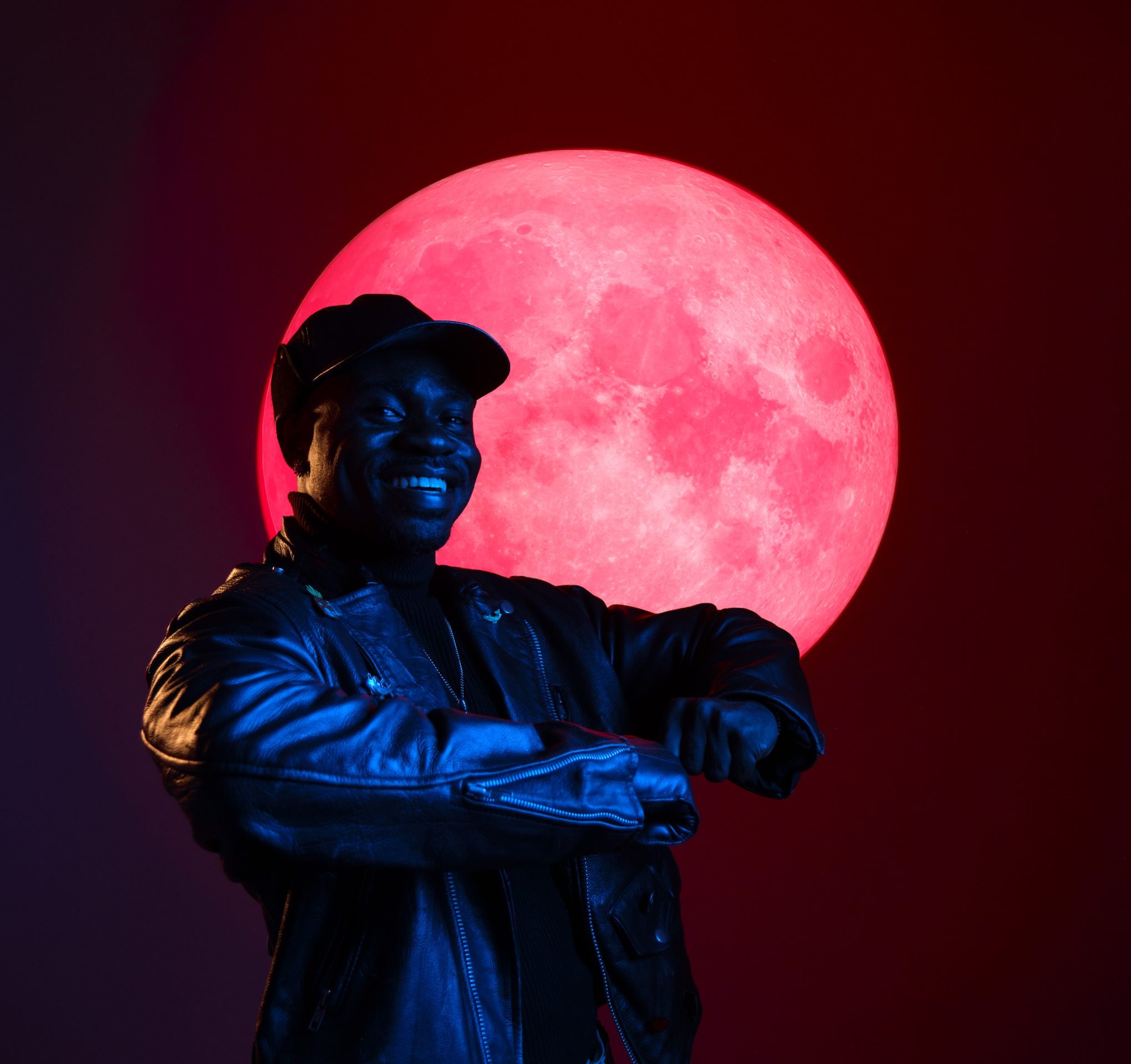
Through a spiritual reawakening, the artist strips away his past to lay bare a journey of deliverance, vice, and divine alignment.
Music and artistry form the very marrow of a musician. To create is to mine the depths of human emotion, tapping into the raw realities and visceral experiences of one’s own life journey. For an artist to truly transcend and step into the next epoch of their existence, they must eventually face an epiphany: a “road to Damascus” moment that fundamentally alters their trajectory. This is the exact circumstance where Moor Sound currently finds himself in, a profound awakening that is radically reshaping his creative direction and artistry.
Having burst onto the scene in the late 2010s, Moor Sound has arrived at a pivotal juncture demanding a higher state of consciousness. In elevating his mindset, he is adopting a new direction: a fresh set of guidelines and spiritual rules to govern how his artistry moves through the world. For a creator seeking alignment with a higher power, a supreme being, and the ultimate Creator, the shift cannot be passive. Every method, every action, every lyric, and every note must harmonize with this new, divine direction.
Fascinatingly, he is executing this transition in reverse. Before fully stepping into the light of his new era, he led his audience to intimately understand who he was, how he operated, the sounds he constructed, and the specific messages he once championed with the release of “CHROME HEART PANTS”. The single that represented the mindset of the Moor Sound of the past. In conversation, Moor Sound was not shy to openly confess, confront, and discard his vices, his shortcomings, and his deepest struggles. He is laying bare the grueling, agonizing work required to shed those old skins, no matter how long or painful the process may be.
Ultimately, when Moor Sound speaks to his audience, he isn’t merely selling a curated narrative or a hollow sermon, he is living his testimony. His message is one of raw deliverance, active repentance, and deliberate elevation toward the divine. This spiritual evolution is beautifully mirrored across his entire creative output not just through the speakers, but visually, through his artwork, videos, and overall aesthetic.
This spiritual rebirth finds its ultimate expression in his latest single, “PAWA”, a sonic awakening that serves as the definitive threshold into his new direction. The single heralds a deeply cohesive upcoming project designed to act as an immersive sanctuary for his audience. With this new body of work, Moor Sound is actively drawing listeners into an entirely new, elevated realm of his sound and message, inviting them to walk alongside him through the music, the message, and the magic of his transformation.
How do you reconcile the raw, high-energy pulse of your earlier production work with the stillness and surrender required by this new faith-driven path?
Looking back, my earlier work was a reflection of who I was at the time. It was bold, high-energy, even a bit ostentatious. It had impact, but it lacked direction and finesse. I was creating from a place of wanting to be seen by everyone, and in doing that, I lost a sense of discernment. Now, I understand that I don’t need to be loud or flashy to express power. Real power is controlled. It’s intentional. I still want an audience, but not just any audience. I want people who truly resonate with me, who feel what I’m doing, and who value it enough to invest in it. That shift changed everything. Back then, I was trying to win everyone over, bending myself backwards. But that’s impossible. I don’t judge that version of me though. I was young, talented, and searching. When I started my journey at RGG Studios in 2017, I was a kid carrying a lot, using music as a way to find validation I didn’t have. Now, I move with clarity. I’m still that same talented kid, but I have direction. And that direction comes from a deeper awareness of something that’s always been there. Guidance, faith & purpose. I don’t need validation anymore. I don’t need to prove anything through noise or excess. I just need to be honest and true to myself. My work is certified not because someone else said so but because I made it. I am great.
Was there a specific moment of cognitive dissonance in your career where your previous sonic identity started feeling like a costume you could no longer wear?
Yeah, I definitely experienced that and it became impossible to ignore around 2023. At that point, I was about six years into the game. I had already achieved things most people don’t expect from a producer in Ghana. Being part of a number one rap album in 2019, “Here for a Good Time Not a Long Time,” not just behind the boards but as a main contributor. I had worked with multiple artists, built a name as Moor Sound, and even had a platform on radio. From the outside, everything looked like it was building toward something solid. Then everything started collapsing. RGG Studios shut down. Artists I had built with, went their separate ways. Some for better opportunities, others just moved on. The industry itself shifted after COVID, and relationships changed. Around the same time, I lost my role at Guide Radio, right when I thought I was stepping into a more secure phase of my career. That period stripped everything away. My structure, my identity, my sense of value. I went from feeling like I was on the rise to feeling completely disconnected from who I thought I was.
And that’s when the dissonance hit. I tried to go back to what I knew. To the same sound, the same approach, but it didn’t feel right anymore. It felt forced, like I was performing a version of myself that no longer existed. But at the same time, it was all I knew, so I kept trying until I couldn’t anymore. That moment forced me inward. I had to go back to the basics. Who I was before everything? What truly made me feel alive? That search brought me back to faith, to God, to a deeper awareness of myself. From that point on, I couldn’t create the same way again. Not because I didn’t have the ability, but because I had outgrown the mindset that produced it. What used to feel natural started to feel like a costume and I knew I couldn’t keep wearing it.
Looking at “PAWA”, are we talking about a reclamation of personal agency, or is this track an admission of total reliance on a higher authority?
Interesting question. I don’t think it’s black or white. “PAWA” exists at the intersection of both personal agency and surrender to a higher authority. The recurring line, “I getti “PAWA” in Jesus name,” explains it perfectly. The power is within me, but the authority comes from God. I had to consciously awaken that power through discipline, faith, and self-awareness, but I also recognize that God is the ultimate source of it all. A big part of that journey was disciplining my flesh. Giving up certain vices, fasting, training my body, quieting distractions. All of that sharpened my mind and spirit. I stopped reacting to life emotionally and started moving with intention. My senses became clearer. My decision-making became clearer. I felt aligned again. The funny thing is, I realized I had this “PAWA” when I was younger too. Back then, I was unknowingly walking in it because I was following the structure and guidance my mother gave me. But after years of losing myself, hitting rock bottom forced me to ask: what was I doing right before? That question brought me back to the basics. Back to discipline, back to faith, back to God. So “PAWA” is both a reclamation and a surrender. I had to take responsibility for myself and awaken the power within me, but I also understand that the grace, authority, and purpose behind it comes from God.
How are you navigating the expectations of the community you’ve built while introducing a sound that demands a completely different kind of spiritual maturity?
The simple answer is: I’m not trying to manage anyone’s expectations anymore. Early in my journey, I wasn’t intentionally building a community or standing on any real values. If I’m being honest, I wanted validation. I wanted everybody to like me. My approach to music reflected that too. Loud, attention-seeking, high energy but without real direction or spiritual grounding. Back then it was “Moor Sound made it bang.” Now I understand that not everything needs to be loud to be powerful. Over the past few months I’ve become quieter, more disciplined, more intentional. Less chasing. More alignment. I stopped trying to make everybody understand me and started focusing on the people who genuinely feel me and resonate with my values. That shift changed everything creatively, spiritually, and personally. “PAWA” was born from that space. So I’m not afraid of losing people through this evolution. I think real growth naturally attracts those aligned with you and distances those who aren’t. I’ve made peace with that.
Beyond the lyrics, what specific instrumental textures or frequencies are you experimenting with to translate “faith” into a physical, immersive listening experience?
Another very interesting question. To be honest, I don’t usually approach creativity from a purely intellectual place. I create based on feeling first, then I make sense of it afterwards. A good way to explain it is: if I were a visual artist, I’d probably name the painting after finishing it, not before starting it. That’s how my process works. I don’t sit down and say, “this frequency represents faith.” I follow what feels true in the moment and understand the deeper meaning later. That being said, while working on “ODESHI”, I noticed I became deeply drawn to string instruments, especially guitars. I’d say around 80% of the project is built around some form of string-based melody — “Chrome Hearts Pants” being a good example. There’s something about the emotional texture and frequency of guitars that puts me in a very receptive state mentally and spiritually. It feels grounding, almost meditative. That space allows me to tune in more deeply to myself, my emotions, and what I believe God is trying to communicate through me creatively. So even though it wasn’t entirely intentional at first, I do think those textures became a vehicle for translating faith, reflection, and inner alignment into sound. My hope is that listeners can feel that energy too, even if they can’t fully explain why.
Do you see this shift as a total departure from the “old” Moorsound, or is this an excavation of a side of you that was always there, just buried under different aesthetics?
I don’t really believe there’s an “old” me and a “new” me. Like my Father in heaven says, “I am that I am.” What I do believe is that over time, growing up in the world can make you feel like you’re not enough as you are. You start thinking you need to become somebody else to be accepted, respected, or considered great. That’s where things started going left for me. So this journey isn’t really about reinventing myself. It’s about unlearning years of programming and returning to who I was before fear, validation, ego, and survival instincts started covering it up.
The Bible says God knew us before we were born, and I think that idea is deeper than people realize. I don’t believe our existence is random. Even our names carry meaning and direction. Out of all the names in the world, why do we have the ones we do? I believe some things are spiritually assigned before we even arrive here.
My name is Isaac Asirifi Bempong which translates to “a joyful man destined for prosperity and influence”, but a joy that comes through struggle and endurance. So when people hear this new music and think I’m becoming someone different, I actually feel like I’m becoming more myself than ever before.
Greatness was never something I had to chase externally. It was already within me. I just had to remember.
If this project is the bridge between these two worlds, what is the one element of your previous creative direction that you’re refusing to leave behind?
Honesty. That’s the one thing I refuse to leave behind. No matter what phase I was in creatively or spiritually, honesty has always been at the center of my music. Even when I was searching externally for validation, I was still being truthful to who I believed I was at the time. You could hear it in the production, the energy, the lyrics… everything. Maybe it comes from my hip-hop roots, but music is probably the last place I’ll ever tell a lie. I live my raps. I always have. What’s changing now is my level of self-awareness and alignment, not my honesty. If anything, the truth in the music is becoming even clearer because I understand myself more deeply now. That part of me is never changing.
From a technical standpoint, how has your approach to sound design and layering evolved to ensure your production carries the weight of this new message without losing your signature edge?
On “ODESHI”, I actually took a step back from making beats myself and focused more on songwriting, arrangement, and executive production. I think I only fully produced one record on the project, and it’s not even my typical hard-hitting style. It’s a smoother R&B record with Ess Thee Legend. Most of the production was handled by YC Madeit. He also produced “CAN’T GET ENOUGH” on KILLA KESTRO ON THE WAY and “FAYA” with Halfco Baby. I really fell in love with his approach to production because it still has impact and energy, but it’s melodic and spacious enough to let the storytelling breathe. Then you have Mirakilouz Beatz on “CHROME HEARTS PANTS,” plus production from Bhankie as well. At this stage, my role has evolved into curating and guiding sound just as much as creating it directly myself. I spent years training my ears while developing my own production skills, so now I instinctively know when something fits the sonic world I’m trying to build. That instinct allows me to collaborate with other producers without losing my identity or signature edge. All the mixing and mastering is handled by Halfco Baby — “The German Machine.” He actually reminds me a lot of Foreign Local, my old partner at RGG Studios, who was also German. I don’t really believe those kinds of connections are coincidental. So technically, my process has evolved from individual creation into creative direction and sonic world-building. Instead of trying to control every layer myself, I now know how to bring different minds together to create something even bigger than what I could achieve alone, while still keeping the spirit of Moor Sound at the center of it all.
In the process of putting this album together, what was the most difficult conversation you had to have with your own artistic ego?
To be honest, by the time I started putting ODESHI together, I was almost done with music completely. There wasn’t much ego left to wrestle with. Life had humbled me deeply and I was very close to throwing in the white towel. My saving grace during that period was Halfco Baby and YC Madeit. “FAYA” was the first song that really pulled me out of depression and disconnected me from the mental matrix I was trapped in. YC randomly found my page one day, asked if he could send me beats, and one of those beats became “FAYA.” At the time, I was chilling with Halfco, so I played him the beat and he instantly came up with the hook: “No I won’t fold, I won’t lose no hope… My heart is cold, no fit to sell my soul…” That moment hit me profoundly because Halfco doesn’t usually make music from that emotional space. I hadn’t even fully opened up about what I was going through, yet somehow he said exactly what I needed to hear spiritually and emotionally. We released that record with almost no promotion, but it organically became one of my most listened-to songs on Spotify. That was the first time I started realizing maybe my music still had purpose beyond my own pain. Then there’s Mathias Kobla — my number one fan. He genuinely helped me rediscover my value. He kept posting my music consistently, making videos, sharing my work with real belief and excitement. There was a point where he believed in me more than I believed in myself, and eventually that energy reached me. So the hardest conversation I had with my artistic ego wasn’t about fame or control. It was accepting that my music still mattered even after I had personally given up on myself. The conversation became: “The world needs your music. Keep going.”
Since “”PAWA”” is the embodiment of this new trajectory, what does the music sound like when that “power” is challenged by moments of human doubt?
Honestly, since moving in this direction spiritually and creatively, I’ve become much more intentional about protecting my mind, spirit, and body because I’ve realized that alignment is what allows me to access that “PAWA” fully. Discipline, fasting, training, prayer. Those things keep me grounded and clear mentally. That doesn’t mean moments of doubt or emotional heaviness can never exist. I’m still human. But now, instead of drowning in those feelings, I process them differently. I imagine that if “PAWA” were ever challenged by deep human doubt, the music would probably sound like David’s Psalms in the Bible. Raw, vulnerable, questioning, but still rooted in faith underneath the pain. A verse like Psalm 13:1-2 captures that feeling perfectly:
“How long, Lord? Will you forget me forever? How long will you hide your face from me?” What makes those Psalms powerful to me is that even in confusion, fear, or sadness, there’s still a connection to God. The doubt never fully disconnects David from faith. And I think that’s what “PAWA” really is too, not the absence of struggle, but the ability to remain spiritually connected through it.
Follow @theimullar on Instagram and X(Twitter) for more.