


As humans, one of the greatest things we can do is live a life which will be so important that people will always circle back to us long after we are gone. That is how legacies are built and created. In a world of entertainment, every individual has their reasons for venturing into the space. Few aim to not only secure fame and fortune but to build a legacy that will outlive them. Building a legacy is not something that comes easy. Some have deliberately chased for it but never reached it and some have built a legacy despite their short time in the space.
That is the story of Ghanaian actress Suzzy Williams (of blessed memory) who despite having a short career, lives a life that echoes around even in today’s creative space. Her influence and iconic status may be disputed by many but it begs the question of how then have people who were born after her demise still reference her as an inspiration in their style and unapologetic expressions.
Suzzy “ Lebene Malike” Williams, at a young age and in the early stages of her career, quickly became a fan favourite. Her excellent acting skills and showmanship made her one of the most sought-after actors of her time.
While this writer was not actively present during her prime, the conversation around her, whenever they have come up, presents her as “a generational talent,” as the football fanatics will put it. In the end, she cemented her place as one of the pillars of female artistry in the country. Suzzy starred in such films as Mother’s Heart, Calamity, The Comforter, and Bloody Mary. She also featured in movies alongside some of the continent’s finest like Ramsey Noah and Stephanie Okereke in the movies Lover Boy In Ghana and Official Prostitute, She also featured in TV shows “Tentacles”, “Things We Do For Love”, and “Sun City.”
Her on-screen appearances did not only end at movies and TV shows. She made appearances as a vixen for Reggie Rockstone’s AH ft. KK Fosu as well as VIP’s Ahomka Womu. Her marketability was so great that she would become the face of many commercials, including beauty products, which earned her the moniker “Chan Chan Lady.”
“I remember seeing her in Sun City and quickly liking her. Finding out later on about how brave she was in standing up for what she believed in and being an icon for baddies all over the country, I decided to make a song about her.” – JayCliff
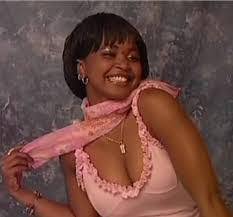
From a young person’s perspective, Suzzy embodied the essence of being young, confident and free. Her non-conformity to society’s strict living where women were often policed and treated with a stricter lens made her a point of caution for many parents as far as their daughters were concerned. For younger girls during her time and today’s era, Suzzy stands out as a huge influence in their willingness to push boundaries. Today, young women regardless of their age are daring in their expressions and drive for what they believe which is somewhat evident of what Suzzy represented and stood for.
Like the late Suzzy Williams, Ghanaian legendary female artist Mzbel who was also a non-conformist and shared similar fashion styles was also on the receiving end of public backlash. Their style which is heavily condemned has become the go-to style for most women in and outside the creative space.
At the age of 23, Ghana lost a gem in Suzzy when she lost her life after being involved in a car crash at Labadi in Accra on 8th September 2005. Her death was a big blow not to just her family and friends but to the industry. At the time, she was touted to be one of the most promising stars as far as the creative industry was concerned. Her demise was met with sadness and pain and many were looking forward to her making herself and the country proud on the big stages.
Even in death, Suzzy continues to be celebrated and immortalised by generations who were young when she was alive and generations who came after her demise. For all the divas present like Amaarae, Wendy Shay, Efya, Gyakie, Maya Blu and a host of others who are outspoken and daring in their self and career, Suzzy Williams’s career may have presented a blueprint for them. She has been an influential figure for many young women with her personality, fashion and style. She had a vision, and a plan and saw it through regardless of the outburst and backlash.
To provide their own account of their understanding of who Suzzy was, we spoke to some individuals who had this to say.
Twumasi:

Suzzy was a firebrand creative. She represented a certain group of characters in Ghanaian society who before weren’t featured in mainstream Ghanaian cinema because society or society judged them as being morally corrupt. She was fearless, bold, beautiful, and very talented.
From my memory, she was criticised a lot. Mainstream media at the time, which was TV, radio, and newspapers, were very reflective of the average Ghanaian cultural and value system. The media wasn’t very receptive to her. The media found her too difficult to control.
I don’t think her demise left any such significant vacuum, because a lot of younger actresses played the role she was playing. However, what her career could have been will forever be the most unfortunate part of her demise.
As far as her impact is concerned, I think she gave film producers and directors a canvas to portray a certain archetype of Ghanaian female characters not fully covered on Ghanaian screens at the time. She also gave women the confidence to be bold about their lifestyle even though they lived in a failing society that judged their life choices.
Dede Ayeh:
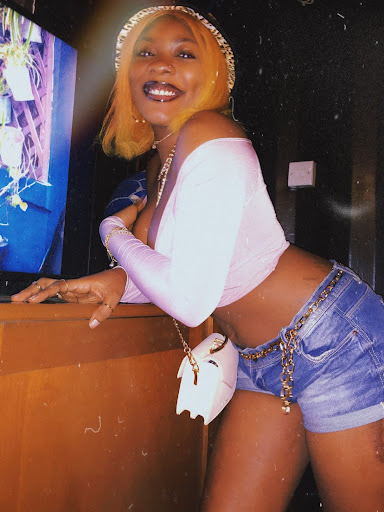
Her outfits and her vibe. I just thought she was so pretty and cool. Every time she came on my screen I got so excited. She shaped my fashion style. The crop tops, spaghetti tops, belts, mini skirts, and shorts. She was a fashion icon. Also her attitude. I loved how she carried herself regardless of how society perceived her. That has always stuck with me.
Honestly, I don’t think so. I mean she is a household name and everyone talks about her from time to time but we haven’t delved into her impact when it comes to pop culture and aesthetics. I think being who she was in her era was a big deal. Considering how conservative Ghanaians can be. I would love to see a deeper dive into who she was as a person and her impact on the entertainment industry outside of just being a sexy baddie.
I loved her in all the shows, from Tentacles to Sun City. And as far as films go, The Ugly Side of Beauty was always on TV. I think my greatest impressions of her growing up were actually from her music video work. “Ah” with KK Fosu and Reggie Rockstone (probably because of all the bloody scenes, but it was so beautifully written) and “Ahomka Womu,” because what little girl didn’t want to be pretty like Suzzy? To light up every room she walked in?
Like many greats, she started early. It’s surreal to think she was only in the film & TV industries for three years when you consider the magnitude of her impact. As cliché as it presents, she did influence multiple generations of baddies. To be more specific, her fashion, charisma, and drive. Everyone was in awe of her, rebellious as she was.
Suzzy Williams will always be a national treasure. From her fans rallying at the police station after her accident to the turnout at her funeral? It’s inarguable. But we have (and I mean our continent as a whole) a significant archiving problem. Her Wikipedia page doesn’t have her birthday noted, doesn’t detail her entire filmography, etc. We can do a lot better. I’d also love to see so many of her commercials resurface. We called her Chan Chan Lady, but I reckon that ad is buried deep in the archives at one or some of our local TV stations.
I think institutions like the National Film Authority can help with our archiving and distribution issues. There’s so much we’ve forgotten or never saw in the first place. On a personal level, I celebrate her legacy by watching her projects, (honorable mention to “Official Prostitute”) and stuff I was probably too young to get into (I started watching “Fresh Trouble” earlier this year).
Bottom line: digging deeper to find more pictures of her, shifting the narrative away from the circumstances of her death, and focusing on her come up and reign in the industry. Making all of these super accessible online… I’m sure her mother would approve.
P.S. (I’d love to write a biopic about her one day)
Written by Nana Kojo Mula.

