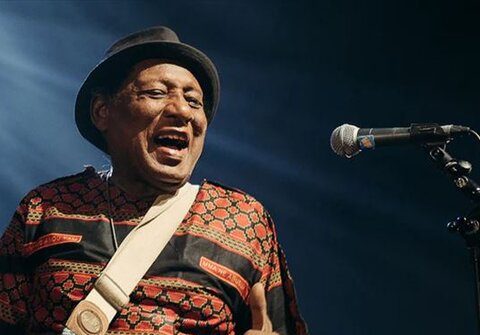
It is with a heavy heart that we acknowledge the passing of a titan. Ebo Taylor was not just a musician; he was the primary architect of a sound that bridged the gap between the ancestral rhythms of Ghana and the sophisticated harmonies of the global Jazz stage. For over seven decades, his guitar was a wand that conjured the spirit of Highlife, Jazz, and Funk, weaving them into a tapestry that felt both ancient and revolutionary. His departure marks the end of an era, but his influence remains an immovable landmark in the topography of African music.
Born in 1936, Uncle Ebo’s journey was one of relentless curiosity. From the vibrant dance bands of Accra to the smoky Jazz clubs of 1960s London, he absorbed the world’s sounds only to refine them through a distinctly Fante lens. Ebo Taylor deepened his commitment to his roots, mastering the art of the horn arrangement and the rhythmic “scratch” of the guitar. He narrated the soul of a nation, ensuring that the pulse of the Saltpond coast could be felt in every corner of the globe.
His creative evolution was deeply intertwined with the legends of the Ghanaian scene before their collective migration to the United Kingdom. Alongside fellow pioneers like Teddy Osei and drummer Sol Amarfio, Ebo Taylor was a vital force in the Highlife circuit of the late 50s and early 60s. His stint with the late Teddy Osei-led Stargazers Band and later leadership of the Black Star Highlife Band served as a crucible of innovation. While Osei and Amarfio would go on to form the global Afro-Rock powerhouse, Osibisa, Ebo Taylor remained the orchestral visionary, crafting masterpieces like “Twer Nyame” and “Love and Death” that elevated Highlife into a sophisticated art form.
The historical weight of his career is perhaps most evident in his creative brotherhood with Fela Kuti. Their bond was forged in 1962 London, where Fela, then a student, would frequently visit Ebo’s apartment to spin records. While Ebo Taylor provided the established Highlife foundation that influenced Fela’s early sound, he credited Fela with the radical push to abandon standard jazz in favor of creating a uniquely African sonic identity. This was a partnership of mutual elevation; even years later, in 1967, Fela would drive to Cape Coast specifically to seek Taylor’s counsel. Together, they engaged in deep dialogues on African unity, essentially blueprinting the intellectual and rhythmic DNA of what would become Afrobeat.
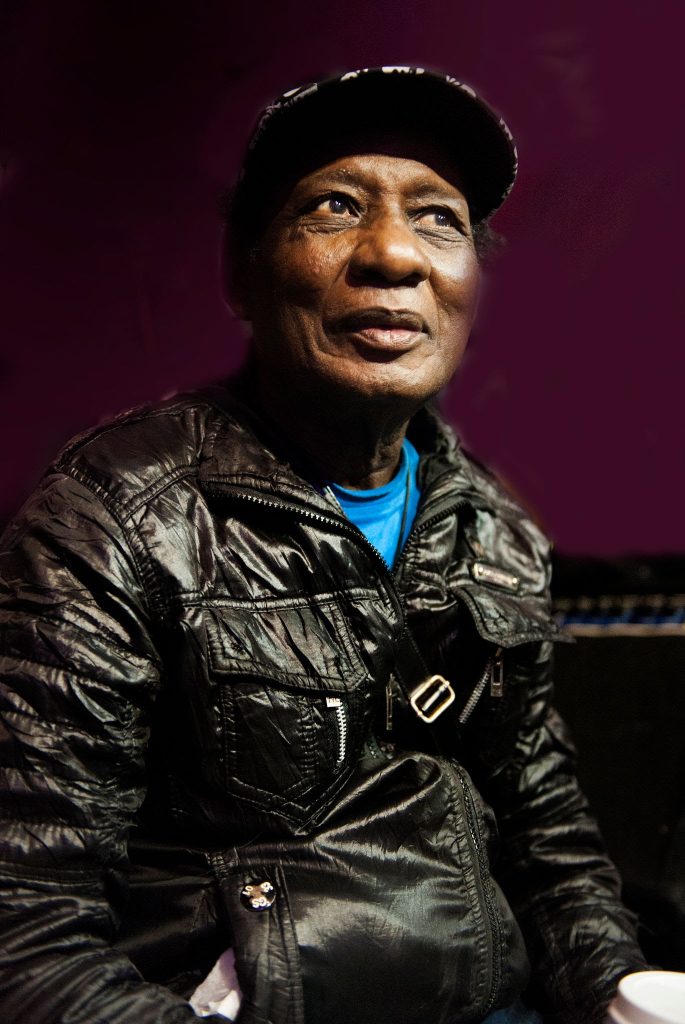
Upon his return to Ghana, he became the quintessential “architect of the sound” behind the scenes. During the 1970s, he became a powerhouse producer and arranger, shaping the careers of other icons. His touch was on seminal records for PatThomas, C.K. Mann, and Gyedu-Blay Ambolley. By blending his London-honed Jazz sensibilities with the raw energy of regional Highlife, he helped create the Golden Era of Ghanaian music. He built the infrastructure of a movement, ensuring that the Ghana’s musical identity remained sharp, funky, and world-class.
Despite his massive influence on icons like Fela, Uncle Ebo remained the “gentle giant” of the movement. He possessed a rare humility, often preferring to let his complex, interlocking arrangements speak for him. Whether he was leading the Black Star Band or the Uhuru Dance Band, his leadership was defined by a pursuit of excellence that never sacrificed the warmth and groove that made Highlife so infectious. He carried the poise of a scholar and the heart of a performer, never seeking the spotlight as much as he sought the perfect sound.
In his later years, Ebo Taylor experienced a well-deserved global renaissance. While many artists of his generation faded into the background, Uncle Ebo was discovered by a new generation of music enthusiasts and DJs from Berlin to Brooklyn. He took to international festival stages with the same vigor he had in his twenties, proving that true Funk has no expiration date. He became a living bridge, connecting the golden age of post-independence Ghana to the modern Afrobeats explosion, reminding us all where the heartbeat of the music truly began.
The “Love and Death” he so famously sang about reached its final cadence yesterday. As he joins the ancestors, we take comfort in the fact that his discography is an eternal flame. He taught us that sophistication does not require a loss of identity, and that one’s heritage is the most powerful instrument one can ever play. Ghana has lost a son, and the world has lost a genius, but the wind through the palm trees will forever carry the echo of his guitar. Rest well, Uncle Ebo Taylor; the arrangement is complete, and it is nothing short of a masterpiece.
Follow @theimullar on Instagram and X(Twitter) for more.