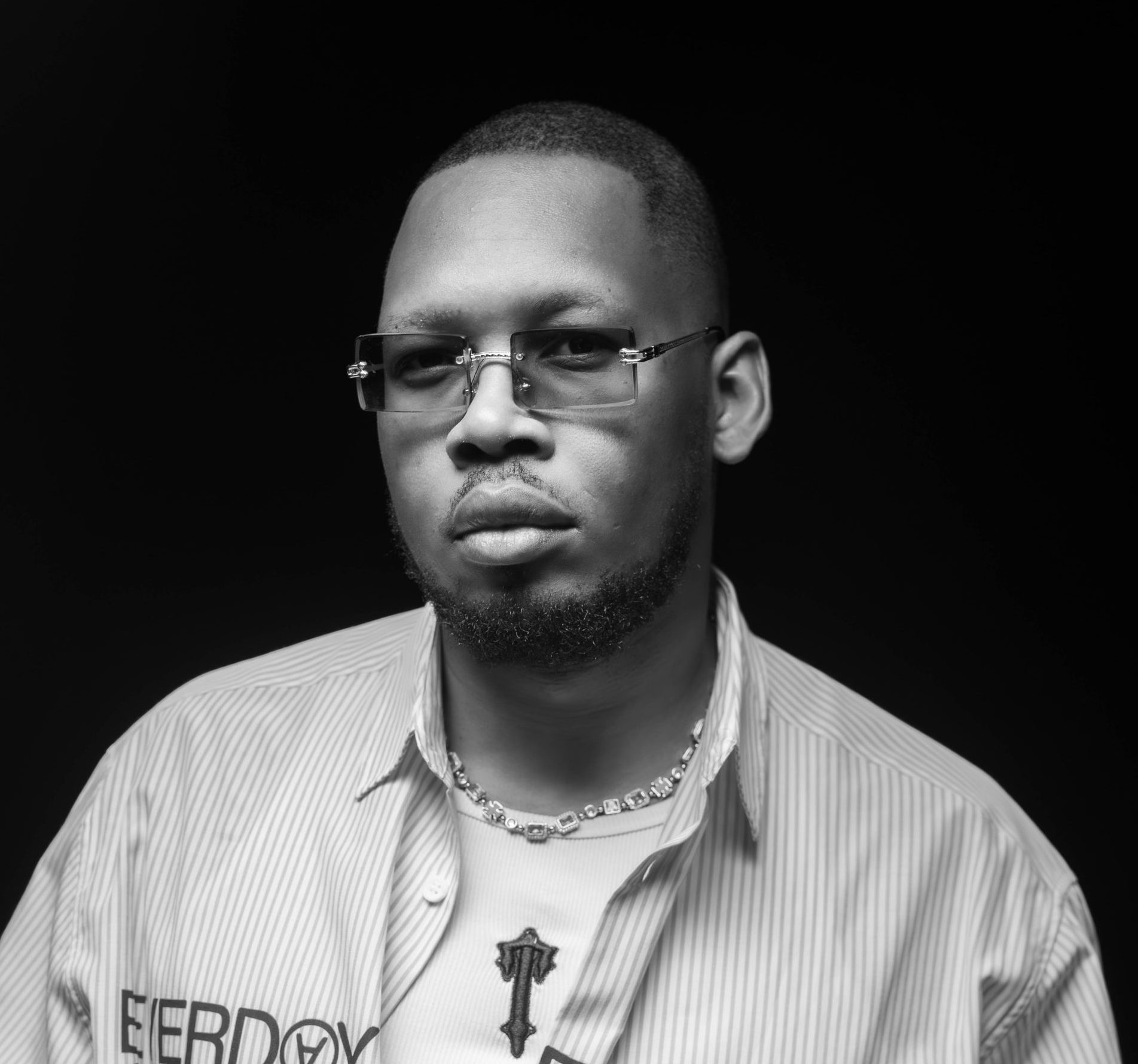
Artists see life through creativity as the purest form of expression, mapping raw thoughts, complex emotions, and the self onto a medium, whether canvas, instrument, stage, or written page. However, a rare few exist at the intersection of the creative and corporate worlds, balancing both mindsets. One such figure is Akitoye Balogun, known creatively as Ajebutter22.
Bridging tech and music and standing among the pioneers of Nigeria’s Alté movement, he brings a unique outlook to his craft: the pragmatic meets the whimsical, and methodical structure aligns with total freedom of expression. This duality has guided his wisdom and artistic output throughout his career. As a masterful storyteller with an unmistakable cadence, he presents narratives from multiple angles, drawing listeners into complex perspectives while leaving room for them to find their own meaning. In his own words, art is subjective, and interpretation is personal. Audiences connect deeply with his work because of this open-ended clarity.
Building on his previous projects, his new album, “Big Bad World”, offers a fresh lens into the lives of Lagos netizens. The project explores the economic reality, social commentary, and everyday grind of the Lagos hustle. As a social commentator, he doesn’t narrate from an aloof vantage point; he speaks within the city’s daily rhythm He translates the experience from the inside out, bridging the gap between simply surviving in Lagos and successfully carving out a place for oneself.
In a conversation with iMullar, we sat down with Ajebutter22 to discuss his artistry, his evolution, and the story behind “Big Bad World”.
This interview has been edited for clarity and length.
How’s life treating you now?
I can’t complain. Just finished the Bandage Session. We did some shows in Toronto and ATL, too. The energy was really good, and I think we might do another one in Lagos soon. Good times. I’m grateful. I dropped the Polanco Dreams video yesterday. You guys should go check it out if you haven’t seen it yet.
Looking at your past projects, “What Happens in Lagos”, “Soundtrack to the Good Life”, and your latest EP, what shifted in your personal life that made you feel ready to address the “Big Bad World”?
“Big Bad World” is also about what happens in Lagos. It’s an update. Imagine you’re watching a TV series or a movie. If What Happens in Lagos were a full TV show, “Big Bad World” would be an offshoot. That’s what “Big Bad World” is to What Happens in Lagos: both speak to life in Lagos and what happens here. Both projects are touching on that. I feel like “Big Bad World” is a shorter, more up-to-date version of today’s world.
How did you ensure the beats felt fresh while retaining that signature “Butter” swing?
I mostly worked with one producer. I worked with two producers on the project. I worked with Casey Freely, who produced five of the six songs, and another producer, SMVVKE, on the EP. It was mainly the two of them, and I didn’t want too many people because I wanted a concise project where we could explore different sounds while maintaining the soundscape consistent throughout the EP. If you notice, I didn’t feature anybody on the EP because I wanted it to be just me again. I wasn’t trying to involve a thousand people. It’s also a personal thing to keep it that way.
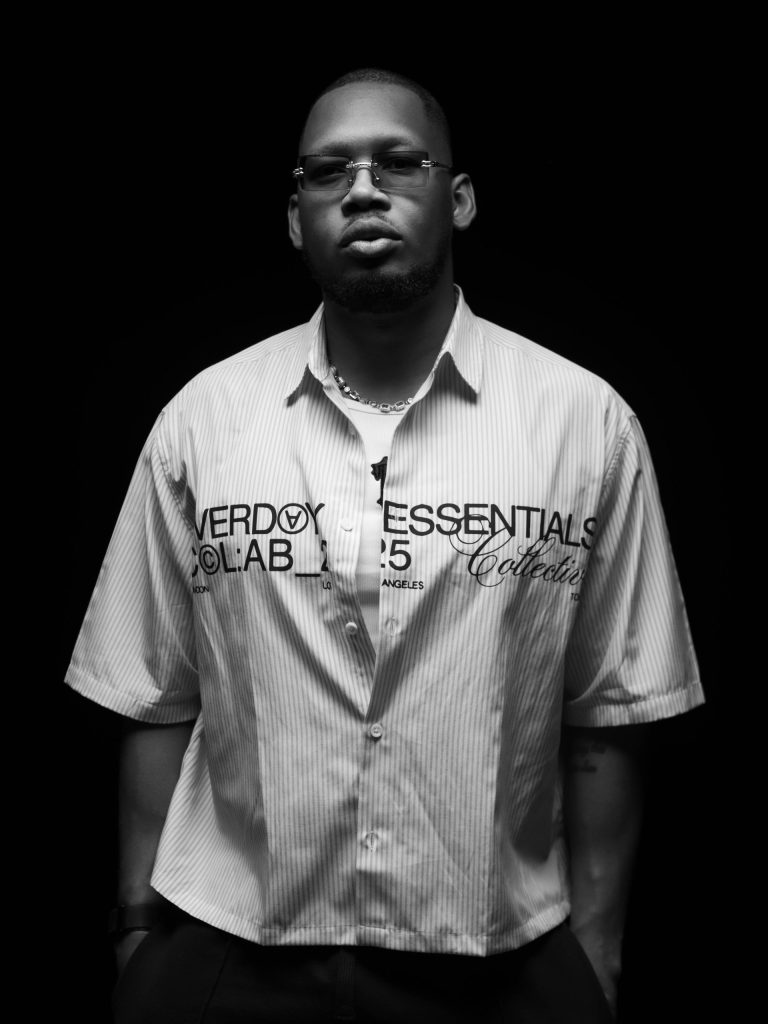
The project kicks off with “Everybody Guide.” Why was this the essential philosophy to set the tone for the EP?
If you listen to “Big Bad World”, what I was trying to do with the EP was set its own tone for how life is now. It shows how life is in Lagos now. It’s a happy place in some ways, but it’s also a place where people don’t really have that much hope. Things are getting harder every single day. I wanted to set that tone early, and “Everybody Guide” does that by transitioning from one song to another as an intro.
It starts with me talking about, “I thought I had a dream to chase in Lagos, but I must be dreaming.” Basically, it suggests you have a dream, but when you come here, that dream sometimes dies, and you have to realign with the reality on the ground. That’s why it transitions from the first part of “Everybody Guide” to the second part, where you’re in a happy dream or in a daze; then, when it comes to reality, it gets very hard-hitting, with all the lyrics and stories I tell in that part.
I say things like, “Is it blind leading the blind? I’m only kind to my kind, illiterates wey no dey read, but go still read your mind, it’s the city where I stay. I got love for where I stay.” Even with all these things and all the reality, I still love the place I am. I just needed to set that tone up, have everybody’s mind switched onto the reality of the “Big Bad World”, which, as I’ve described, is Lagos.
How do you balance reporting on harsh realities with keeping the sonic palette light and enjoyable?
That’s my style. It’s my writing style. I sometimes do social commentary, sometimes perspective, and talk about serious things, but I don’t make it feel too heavy. I make it relatable because people think of serious things in their daily lives, but don’t want to be weighed down by them.
I’m not a preacher. I don’t have preacher energy, but I understand that there’s still a responsibility, if you’re making music, especially if you’re rapping, to touch on something that happens around you and to put those things on record so that people who are not from Lagos, people that are even in the future, can listen to the music and say, “Yo, this was happening at this time.” It’s still lighthearted. It’s still something that people can dance to or vibe to because you want to be able to pass a message, but you don’t want people to be bored as well.
How do tracks like “Format” and “Lagos City Hustler” document the modern Lagos youth’s survival kit today compared to when you dropped “Bad Gang” or “Omo Pastor”?
That’s why I made some of these songs: to show how times have changed, how some things have changed while others remain the same. From “Bad Gang” to now, to “Formats” and “Lagos City Hustler,” a lot has changed in Lagos, from how people move and talk to the economy.
The middle class is a lot smaller. People are way more cynical. Social media has seriously exaggerated people’s lifestyles, and because of algorithms and echo chambers, people just keep seeing and hearing the same things; their views keep getting reinforced. For example, if there are only 20 Lamborghinis in Nigeria, you might think everyone has a Lamborghini if that’s all you see in your echo chamber, because you keep seeing the same 20. That will make you feel, if you don’t have a Lamborghini, “What am I doing wrong? What are the other people doing right?” The reality is there are only 20, and there are 200 million people here, but it doesn’t feel that way. All those things together have really exacerbated the situation that is on the ground in Lagos. I just try to put some of those things into the songs. You hear some of that in “Formats.” You hear some of that in “Polanco Dreams” too.
What does “Polanco” represent in the context of your journey?
Polanco Exotic Cars is a well–known car dealership in Nigeria. “Polanco Dreams” is a race in Nigeria. Young people want to make money, not just to survive or be okay. They want to make money to be able to flex. Not just to flex, but it goes back to what I was saying: to show other people that they’re up. That song talks about making money any way you can, not to survive, but so other people know you’re up.
I say, “I get BBL baddies with Polanco Dreams, Working boys with Polanco Dreams. If everything clicks and the money don reach, we go tear that rubber and scatter IG, so gbo”. Basically, you’re trying to make that money so that you can show people that you have it. In one way or another in Lagos, it might not have been directly Polanco or buying a car. That’s just the example I use for the song.
I say, “Every young n**** wants a Maybach, but every young n**** wanna payback haters. Every young n**** wanna lay back…” Basically, young guys are trying to make money so the next man knows they’re up. When you make money, you want to show people that you’ve got it. That’s pretty much the idea of that.
With the way people make money to oppress, is there a message where you’re basically shedding light on the reality of it or making people understand that they shouldn’t necessarily search for that dream?
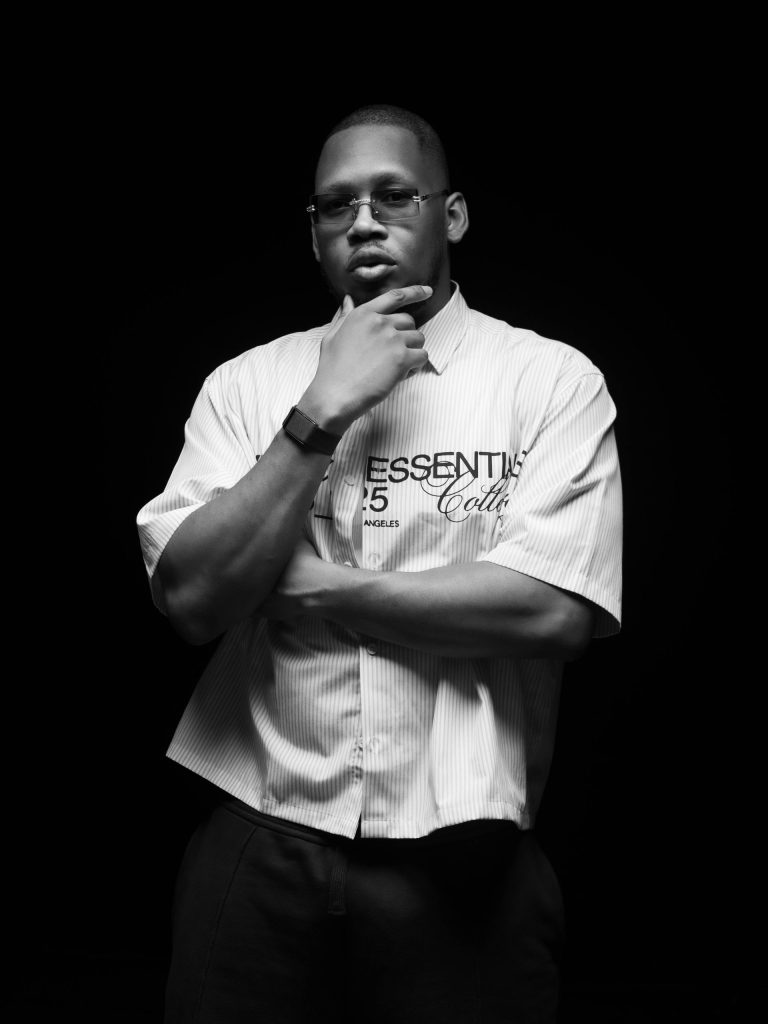
In the song, I don’t necessarily say, “Don’t do this,” or “Do this.” I’m just saying, “This is what people are doing.” It’s up to you to understand the motivation behind what people are doing. I’m not saying, “Don’t do this. Don’t do that.” As I said, I’m not really a preacher. My job is to observe and see what I see.
You ended the EP with “More or Less?” When you reached the end of making this EP, what conclusions did you arrive at regarding your place in music and life right now?
“More or Less” is one of the personal songs on the EP where I address where I am in life. From a personal perspective, it’s still about Lagos because I live here, but I talk about myself and my mindset. After so many years in the game, I still get imposter syndrome sometimes. I just want to relax, go to the beach, get respect as a rapper, as an artist, and in life. If you listen to the whole track, that track really puts some perspective on where my mindset is in the music industry and what I’m doing.
You mentioned imposter syndrome, and I know a lot of people go through this. How do you deal with that?
I just try to remember that I am Him. To be honest, when you go out to shows and you see all the numbers you’re seeing on Spotify, YouTube, Apple Music, or whatever streaming platform, these are real people. These are real people every day listening to your songs. Nobody begged them to listen. They themselves searched this thing out.
Sometimes, when you’re just at home on the internet, it seems like someone has bigger numbers than you, but numbers are numbers in the end. A hundred thousand streams doesn’t sound like a lot these days, but think about it: 10,000 people are listening to your stuff; that’s still 10,000 people. Have you ever seen 10,000 people? When you’re actually outside, and you interact with your fans, and you do shows, it gives you that belief, and you know that.
Did you record a larger body of work and edit down aggressively, or did you enter the studio intending to create a short, sharp conceptual snapshot?
For “Big Bad World”, I think I did seven records, and I finished on six.
What are the possibilities that we’ll get the throwaway track?
It won’t be for this project. I didn’t, because I felt it didn’t fit into “Big Bad World” the way I wanted. Another context or in another project, possibly. Some songs had features that I was just like, “Man. I really just want this to be me,” so I had to remove that.
What was the inspiration behind going solo for “Big Bad World” in particular?
It’s something I’ve always wanted to do. A lot of my favourite artists have done a project with no features. J. Cole, Adele, just to name a few. It’s something I wanted to do at least once in my career: a whole project that just had me on it. For Butter fans, this is for you.
How does your day-to-day life outside the studio inform the perspective in your pen game today?
Honestly, my day-to-day is my everything. It helps me write relatable music because I don’t try to live like a superstar. I try to live like everybody and experience what everybody is experiencing as much as I can. That helps me write in a way that is relatable and grounded. I like to know what is going on.
As someone who helped lay the groundwork for alternative rap and lifestyle music in Nigeria long before the term “Alté” became a global buzzword, how do you view the current health and direction of West Africa’s alternative scene?
I think the fact that the idea and concept have lived this long means it has become a household thing. I think that’s a good thing. I think it means we’ve been able to leave an impact in the music industry that will outlast us. As an artist, that’s one thing that I really wanted to do. I wanted to do things differently when I was coming into the music industry. Just try to do things differently from what was there when we met them. The fact that some of these ideas and concepts are alive today, and will be for a long time, means I did something right in that regard.
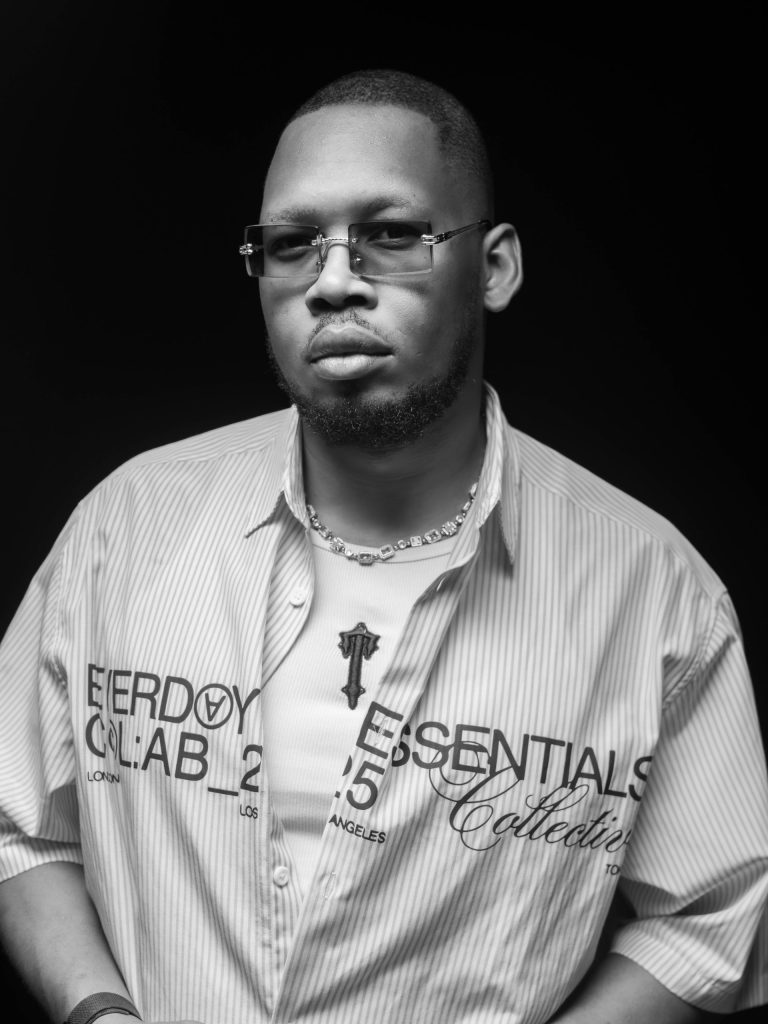
How does it feel to perform your music live in front of the crowd? How does it feel seeing people resonate with you on a smaller or a bigger stage? And how do you incorporate that into your stagecraft?
I love it. That’s probably my favourite part of being an artist. I absolutely love it. Meeting fans in real life, interacting with them, being on stage singing songs that you wrote in your room, in some studio somewhere, or in traffic or whatever ideas that came from me. Seeing that come to life and people interacting with it, it’s great. I wish everybody could feel that.
Is it different per stage, or is it the same kind of feeling on any stage?
It’s different. Almost every stage is different. Every stage, every show, the energy is different. Even on the same stage, if you come for two different years, it will have different energy because it would be a different audience. The energy is always different, and that’s also part of what makes it special. There’s a bit of unpredictability to it every time. Though you might want to give the same show, you still change things in your shows. Even if you’re trying to keep it the same, there’s always that area where you never know what’s going to happen because there are so many different variables.
Now that “Big Bad World” is out in the wild, what does stepping into this new era look like for you in terms of live experiences, visuals, and where you want to take your creative journey next?
I already started working on the next thing, but we’re still on “Big Bad World”. We still have visuals to put out and the project to push, but I’m already working on the next thing: “Afrosoft”. That’s going to be next year. I’m excited for that.
Will we see a “Big Bad World “performance in Accra, Kenya, or Lagos?
I did one in Lagos. I think Kenya, possibly. I don’t know about Accra yet, but never say never.
Follow @theimullar on Instagram and X(Twitter) for more.