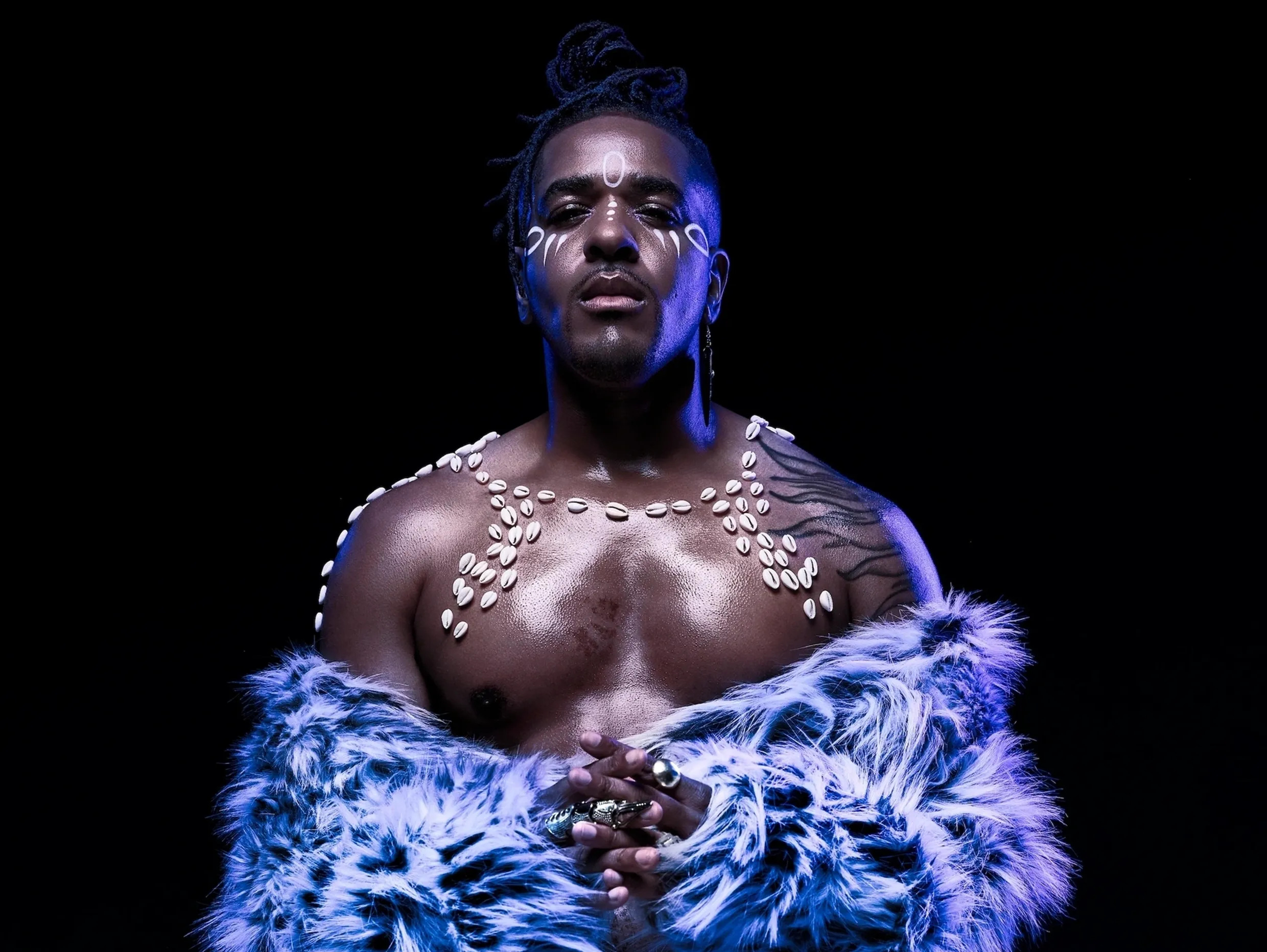
A profound, almost spiritual alchemy occurs when the African diaspora decides to stop searching for home and starts building a sonic bridge right back to it. Coming off a monumental 2025 Grammy win, Chicago-born, LA-based artist Matt B is executing a masterclass in cultural archiving and ambitious scale.
With “Alkebulan III: The Water Remembers”, Matt B completes an ambitious trilogy that began as a curious exploration of African rhythms and evolved into a deeply personal return to his ancestral roots among the Igbo people of Nigeria. Recorded in the storied halls of Abbey Road Studios alongside sweeping orchestral arrangements, the album seamlessly weaves the grandeur of classical instrumentation with the living, breathing pulse of West Africa, featuring powerhouses like Fatoumata Diawara, Camidoh, The Cavemen, Skales, Boy Spyce, and Goya Menor.
Beyond the music, Matt B’s 2026 run spans an upcoming documentary film, a three-part docuseries tracing his Nigerian lineage, and a transition onto major Hollywood studio lots to spearhead original television content. Yet at the heart of this sprawling universe lies a single, profound truth: that while oceans may separate us, the water holds our stories, waiting for us to remember.
Ahead of his highly anticipated project, “ALKEBULAN III: The Water Remembers”, a sprawling sonic tapestry with features from African powerhouses, we had a conversation with Matt B. We unpacked the weight of ancestral memory, blending classical orchestral arrangements with West African polyrhythms, and what it truly means to carry the South Side of Chicago into the global African canon.
This interview has been edited for clarity.
What was the inspiration behind “The Water Remembers” as the title for this installment of the “Alkebulan” album series?
The Water Remembers came from the idea that water carries memory. Whether you look at it spiritually, poetically, or culturally, water has always been a witness to history. It has touched every generation that came before us, and I was drawn to the thought that the same waters our ancestors crossed, cried into, prayed over, and lived beside still exist today.
For me, that became a powerful metaphor for this album. So much of the African diaspora is rooted in journeys across water, both beautiful and heartbreaking. The Atlantic Ocean separates us from our ancestral homeland, but it also connects us. It holds the stories of those who were taken, those who survived, and those whose names may have been forgotten, but whose legacy still lives within us. As I traced my own ancestry back to the Igbo people of Nigeria and returned to my ancestral homeland, I realized that this wasn’t just my story. It’s the story of millions of people searching for where they come from. The Water Remembers became a reminder that even when history is erased from books or family records, our roots are never truly lost.
This album is about reconnecting with those roots. It’s about honoring our ancestors, celebrating the beauty and diversity of West African culture, and recognizing that the past continues to shape who we are today. In many ways, the water remembers so that we can remember too.
Can you pull back the curtains on recording at Abbey Road Studios alongside the Royal Philharmonic Orchestra for “ALKEBULAN III: The Water Remembers”?
Recording at Abbey Road Studios with the Royal Philharmonic Orchestra is always an incredible experience. Abbey Road is one of the most iconic studios in the world, and you can’t help but feel the history the moment you walk through those doors. So many legendary artists have created timeless music there, and it’s truly an honor every time I get the opportunity to record in that space. This project was especially meaningful because it felt like a full-circle moment. ALKEBULAN II was also recorded there with the Royal Philharmonic Orchestra, and that album went on to win the GRAMMY Award for Best Global Music Album. It was a historic moment, not just for me, but also for the Royal Philharmonic Orchestra, as it marked their very first GRAMMY win in their 79-year history. Coming back to Abbey Road for “ALKEBULAN III: The Water Remembers” felt like returning home, but with a renewed sense of purpose.
The Royal Philharmonic is phenomenal. Their artistry, precision, and professionalism are second to none. They have this remarkable ability to take the musical notes on paper and transform them into something deeply emotional and cinematic. Every note carries intention, and they elevate the music in ways that continually inspire me. For this album, that cinematic quality was incredibly important. The Water Remembers is a story about ancestry, memory, identity, and return. The orchestra became another voice in that story. Their sweeping arrangements create the emotional landscape that allows the traditional West African instruments, rhythms, and languages to breathe and shine. Rather than competing with those elements, the orchestra expands them, making the music feel both deeply rooted in African tradition and universally human.
That’s really what the “ALKEBULAN” trilogy has always been about for me: building bridges between worlds. Bringing together the Royal Philharmonic Orchestra with West African artists, musicians, indigenous instruments, and authentic cultural storytelling creates something that feels timeless. It honors the richness of African musical traditions while presenting them on a cinematic scale that reflects just how unique and profound these stories truly are.
As an introduction to the third installment of the “Alkebulan” series, what made you decide to select “My Mother’s Song” as the lead single?
“My Mother’s Song” felt like the perfect introduction to “ALKEBULAN III: The Water Remembers” because it embodies everything this album represents. It’s warm, inviting, and emotional, but at the same time it’s deeply rooted in authentic West African storytelling. From the very first listen, it draws you into the heart of the journey, and I think that’s exactly how I wanted people to experience this project. The song was inspired by the remarkable true story of a young girl who was taken from Sierra Leone during the Transatlantic Slave Trade. Before she was separated from her homeland, she carried with her a melody from her village, a song that she continued to pass down through generations. More than 300 years later, that melody ultimately helped her descendants trace their lineage back to her original tribe. I remember hearing that story and just being completely moved by it. It perfectly illustrates something I’ve come to believe: sometimes music remembers what history forgets.
That idea connects so beautifully with the central theme of this album. The Water Remembers is about memory, ancestry, identity, and the invisible threads that continue to connect us to those who came before us. While “My Mother’s Song” is an entirely original composition, it honors the spirit of that true story and celebrates the incredible resilience of culture, tradition, and memory. It also became deeply personal because of my own journey tracing my ancestry back to the Igbo people of Nigeria. As I traveled to my ancestral homeland and connected with relatives I’d never met before, I realized that so many of us in the African diaspora are searching for pieces of ourselves that history tried to erase. Music has the power to preserve those pieces. It carries language, emotion, tradition, and identity across generations.
That’s really the heartbeat of “ALKEBULAN III”. Every song is rooted in authentic stories from West Africa and the people who have carried these traditions forward for centuries. My goal wasn’t simply to retell those stories, it was to reimagine them in a way that speaks to today’s listener while honoring the cultures they come from. I hope “My Mother’s Song” invites people into that world and reminds them that our greatest stories aren’t just meant to be remembered. They’re meant to be carried forward.
Was there a specific sonic trait in Fatoumata Diawara’s artistry that made her the perfect choice for “My Mother’s Song”?
Absolutely. From the very beginning, I knew Fatoumata was the perfect artist for this song. She has one of those voices that immediately makes you feel something. It’s not just technically beautiful, it’s deeply spiritual. There’s so much heart, soul, and emotion in the way she sings that every note feels lived-in and authentic. When I was writing “My Mother’s Song”, I wasn’t just looking for an incredible vocalist. I was looking for someone who embodied the spirit of the song. To me, Fatoumata represents everything that a mother symbolizes: strength, grace, resilience, wisdom, compassion, and unconditional love. Those qualities naturally exist in her artistry, and you can hear them every time she opens her mouth to sing.
There are moments where you can feel every ounce of emotion behind her voice, and that authenticity is impossible to manufacture. It feels ancestral. It feels timeless. It feels like she’s carrying generations of stories within her voice, which fits the message of this album so beautifully. She breathed life into the song. I truly can’t imagine anyone else on this record. She elevated the song in ways I never could have anticipated, and I’m incredibly grateful she agreed to be a part of it. I think when listeners hear her performance, they’re going to understand exactly why she was the only choice for “My Mother’s Song”.
How did your journey tracing your Igbo heritage challenge or reshape the way you approach rhythm and songwriting for this album?
Tracing my Igbo heritage completely changed the way I approached this album. It challenged me to slow down and be even more intentional with my writing and creative process. I wanted to make sure every rhythm, every lyric, every melody, and every collaboration came from a place of authenticity and respect. I spent a lot of time listening, learning, and immersing myself in the traditions before ever trying to interpret them through my own lens. Rhythm, especially, took on a completely different meaning. I began to understand that in many West African traditions, rhythm isn’t just something that makes you dance, it’s a language. It tells stories, carries history, celebrates life, and connects communities. That perspective changed how I wrote. Instead of asking, “What sounds good?” I started asking, “What is this rhythm trying to say? What story is it carrying?”
The songwriting evolved in the same way. Rather than writing songs that were simply inspired by my journey, I wanted each one to honor the people, traditions, and experiences that shaped that journey. That’s why you’ll hear the various instruments, voices, and collaborations with artists from across West Africa. Every element was chosen intentionally because I wanted this album to feel like a celebration of the culture, not just an interpretation of it. Tracing my Igbo heritage definitely transformed me as an artist. It reminded me that music has the power to reconnect us with who we are, where we come from, and the generations that came before us.
With the upcoming docuseries and documentary film, how are you ensuring that your personal lineage discovery avoids standard diaspora tropes and feels genuinely grounded in the contemporary Nigerian experience?
That was incredibly important to me from the very beginning. I approached this journey with humility, curiosity, and a willingness to learn. I wanted to be as open and honest with myself as possible in order to get the best result for both the documentary and myself as a human. One of the ways we stayed grounded was by allowing the people of West Africa to tell their own stories. Throughout the documentary, you’ll hear directly from elders, historians, traditional leaders, and everyday people whose voices provide the cultural context. Their perspectives are just as important as mine because this isn’t just my journey. It’s also about honoring the people and communities that welcomed me home.
We also wanted to showcase West Africa as it exists today. It’s easy for documentaries about Africa to focus only on hardship or history, but that’s not the full picture. Africa is vibrant. It’s innovative. It’s creative. It’s full of culture, entrepreneurship, music, fashion, faith, family, and joy. We wanted audiences to experience all of those dimensions alongside the historical context that shaped the African diaspora. At the same time, we didn’t shy away from the emotional weight of the journey. Visiting places like Elmina Castle and the slave sites in Ghana were deeply moving, but those moments weren’t meant to leave viewers in grief. They were meant to provide context for a much larger story. One of resilience, restoration, and reconnection.
Ultimately, this isn’t a documentary about looking backward. It’s about building bridges in the present. It’s about what happens when descendants of the diaspora reconnect with living communities, living traditions, and living cultures. My hope is that people walk away feeling inspired and having dispelled many untruths that we are taught living here in America.
From Skales and Goya Menor to Camidoh and Boy Spyce, what was your curation strategy for balancing these distinct regional West African hitmakers on a single body of work?
The curation was incredibly intentional. Every artist on this album was chosen for a specific reason, and I definitely have to give credit to my wife and manager, Angela V. Benson, who played a huge role in A&Ring this project alongside me. We spent a lot of time talking through who genuinely served each song and who could help tell its story in the most authentic way. That was always the priority. We never approached collaborations as a checklist or an opportunity to stack big names on an album. Every feature had to earn its place. We asked ourselves, “Who naturally fits the message of this song? Who can bring something to it that no one else can?”
Each artist brought their own unique perspective, a distinct regional influence, and their own musical identity. Rather than trying to make everyone sound the same, we leaned into those differences because that’s what makes West African music so rich. Every region has its own rhythms, languages, melodies, and traditions, and I wanted this album to celebrate that diversity. At the same time, I wanted the project to feel cohesive. The common thread wasn’t a particular genre, it was the storytelling. Every artist understood the heart behind the album and embraced the vision of honoring West African culture through authentic collaboration.
That’s what I’m most proud of. These collaborations feel like conversations. They feel like artists from different backgrounds coming together with a shared respect for the culture and a shared desire to create something meaningful. I think that’s what gives the album its spirit, and I hope listeners can hear that in the music.
What is the core truth you want a listener in Lagos or Accra to extract from this album versus a listener in Los Angeles?
At the core, I actually hope they walk away with the same truth: that our stories matter, our cultures matter, and our shared humanity is far greater than the things that divide us. For someone listening in Lagos or Accra, I hope this album feels like a celebration. I want them to feel seen. I want them to hear their languages, their rhythms, their traditions, and their stories represented with authenticity, care, and respect. I hope they recognize that this project was created from a place of deep admiration for the beauty and richness of West African culture.
For someone listening in Los Angeles, or anywhere else in the world, I hope it serves as an invitation. An invitation to learn, to listen, and to appreciate cultures that may be different from their own. I hope it reminds them that it’s never too late to reconnect with where they come from. At the same time, I don’t want listeners to focus only on our differences. I hope they also realize how much we have in common. Whether you’re in Nigeria, Ghana, or the United States, we all love, we all grieve, we all celebrate, we all search for identity, and we all want to belong. Those are universal experiences.
If this album can help someone in West Africa feel proud of their heritage, while inspiring someone in America to better understand their own roots, or simply to appreciate someone else’s, then I feel like it’s done exactly what I hoped it would do. Music has always had the power to bring people together, and that’s ultimately what “ALKEBULAN III”: The Water Remembers is about: connection. Across cultures, across oceans, and across generations.
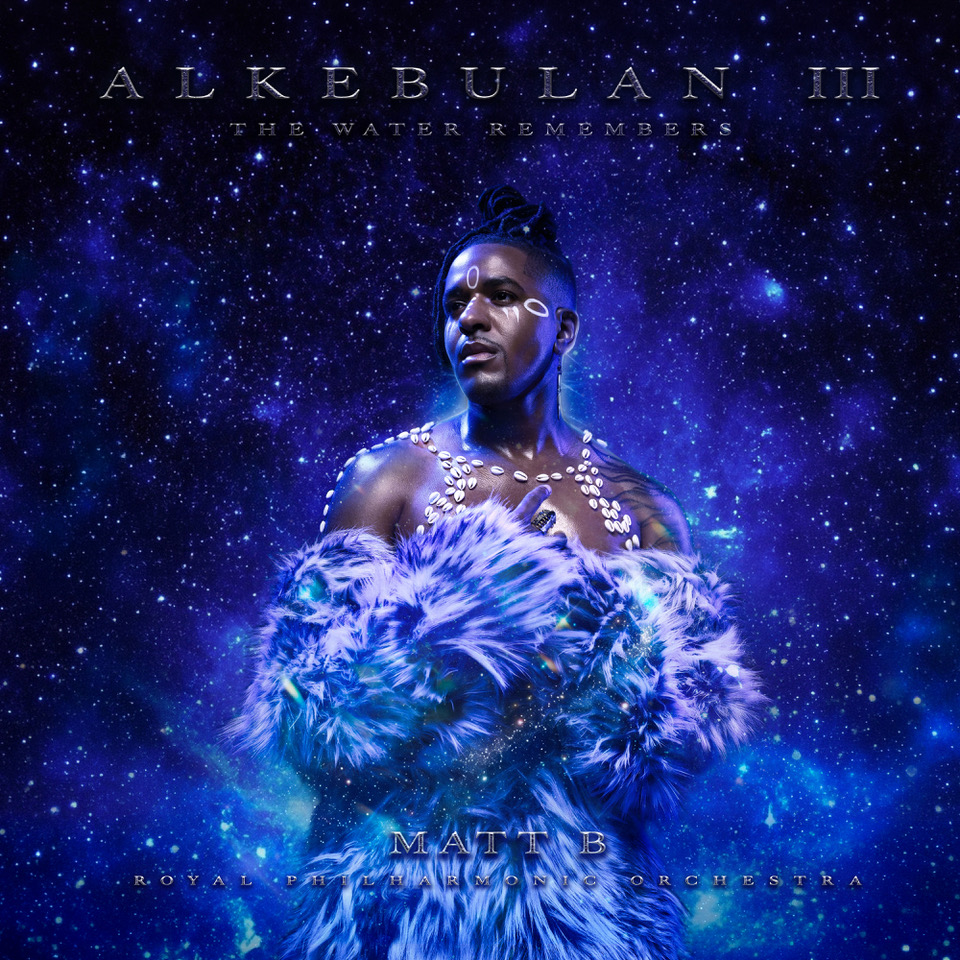
How do you view “ALKEBULAN III: The Water Remembers” as the definitive conclusion to the trilogy?
I see “ALKEBULAN III: The Water Remembers” as the destination the entire trilogy has been leading toward. When I first began the ALKEBULAN trilogy, I was exploring African music and culture from a place of admiration and curiosity. As the journey continued, it became much more personal. I wasn’t just learning about Africa anymore; I was uncovering my own story, tracing my ancestry back to the Igbo people of Nigeria, and returning to my ancestral homeland. This final chapter represents the fulfillment of that journey.
Some people could hear the title The Water Remembers and assume it’s meant to leave listeners dwelling in the pain of history. But to me, it’s actually the opposite. It’s a message of hope. Throughout the album, we travel through stories of identity, loss, resilience, culture, and rediscovery. By the time we reach the final moments, the message isn’t that we’re defined by what was taken from us. It’s that we are ultimately defined by who we have always been. The title track and final song on the album serves as a reaffirmation. It’s a reminder that despite slavery, displacement, and generations of separation, our identity was never erased. Our ancestors are not forgotten. Our story is not forgotten. The water remembers, and it is the bridge between us and our history. Our people. Our culture.
That’s why this feels like such a complete ending. The journey begins with searching and questioning, but it ends with affirmation. It ends with knowing. Knowing where you come from. Knowing whose shoulders you stand on. Knowing that even when history tried to sever those connections, they were never truly lost. For me, that’s the hope at the heart of this trilogy. It’s about moving forward with a deeper understanding of who we are. Our history lives on, our culture endures, and God and our ancestors are still speaking to us if we’re willing to listen.
Given that “Alkebulan II” secured your historic 2025 GRAMMY win, did you approach the studio sessions at Abbey Road with a sense of creative liberation or the weight of immense expectation?
Honestly, I approached this album with a sense of creative freedom. Winning a GRAMMY for “ALKEBULAN II” was one of the greatest honors of my career, and I’m incredibly grateful for that recognition. But I never wanted that award to become a measuring stick that dictated how I created the next project. If I had gone into the studio trying to make “another GRAMMY winning album,” I think I would’ve lost the heart of what made the “ALKEBULAN” trilogy so special in the first place. Instead, I approached “ALKEBULAN III” the same way I approached the entire trilogy. With curiosity, experimentation, and a genuine willingness to learn. I wasn’t chasing the awards, numbers, or expectations. I was chasing truth. I wanted to create from a place of authenticity and simply share everything I had been learning about my people, my ancestry, and the incredible richness of West African culture over the past several years.
Walking back into Abbey Road certainly carried emotional significance because that’s where “ALKEBULAN II” came to life with the Royal Philharmonic Orchestra. But rather than feeling pressure, I felt gratitude. It felt like an opportunity to continue the story, not compete with it. I’ve learned that the best music comes when you’re not trying to prove something. It comes when you’re willing to be vulnerable, to listen, to grow, and to trust the creative process. That’s exactly how this album was made. Every decision, from the songwriting to the collaborations to the orchestral arrangements, came from the heart.
If people connect with this album the way they connected with “ALKEBULAN II”, I’ll be incredibly thankful. But my greatest hope isn’t that people compare the two, or even all three albums in the trilogy. It’s that they experience “ALKEBULAN III”: The Water Remembers for what it is: an honest, deeply personal conclusion to a journey that has changed me not only as an artist, but as a person.
With the inclusion of the Joy-Chords Children Choir and the Kabusa Oriental Choir, how intentional was it to incorporate choral arrangements into the album’s vocal landscape?
It was completely intentional. The choirs are a huge part of the storytelling. Every voice on this album has a purpose, and the choirs represent something much greater than harmony. The Kabusa Oriental Choir became, in many ways, the voice of the ancestors. Throughout “ALKEBULAN III”, you’ll hear moments where it feels like generations are speaking, encouraging, mourning, celebrating, and reminding us of who we are. That’s exactly what I wanted their presence to evoke. Their voices create this beautiful sense that our ancestors are never truly gone. They’re still with us, guiding us, and their legacy continues to live through us.
On the other hand, the Joy-Chords Children Choir represents the future. They symbolize the generations that will inherit these stories, these traditions, and this culture after we’re gone. There’s something incredibly powerful about hearing children sing because it reminds us that our responsibility isn’t just to remember our history; it’s to pass it on. When you put those two choirs together, you almost hear a conversation across time. You have the voices of those who came before us and the voices of those who will come after us, with our generation standing in the middle as the bridge between them. That became one of the central themes of The Water Remembers.
Representation was also incredibly important to me. I wanted this album to authentically reflect the people, voices, and communities that inspired it. These aren’t background vocals added for effect, they’re an extension of the album’s message. They represent the continuity of culture, the resilience of our people, and the idea that identity isn’t carried by one person alone. It’s carried collectively, from generation to generation.
After the release of your album, what should we expect from you in terms of performances, tours, and musical experiences? If there are tours, will countries in Africa be included?
“ALKEBULAN III: The Water Remembers” will serve as the grand finale of the trilogy. It is a three-part immersive experience that will be unveiled over the next several months. The album is the first chapter, but it will be followed by a cinematic short film inspired by the music, and then a documentary that chronicles my journey tracing my ancestry back to the Igbo people of Nigeria and returning to my ancestral homeland. Together, those three pieces tell the full, complete story.
On the performance side, we’re absolutely planning to bring this music to the stage. These songs were created to be experienced live, and we’re already developing ways to make the performances feel as immersive and cinematic as the album itself. I want audiences to feel like they’re stepping into the world of The Water Remembers, not just attending a concert. Africa is definitely part of that vision. It was incredibly important to me that this project be shared with the communities and cultures that inspired it, so we’re actively exploring opportunities to perform across several African countries. It would be an honor to bring this music back to the continent and celebrate it with the people whose traditions, languages, and artistry helped shape the album.
Beyond that, we have some other exciting surprises in store that I can’t quite reveal yet. This project has always been about creating experiences that go beyond music, so I think fans can expect a lot more moments that continue to build on everything that the “ALKEBULAN” trilogy represents. This is a journey, and I can’t wait for people to experience every chapter of it.
Follow @theimullar on Instagram and X(Twitter) for more.