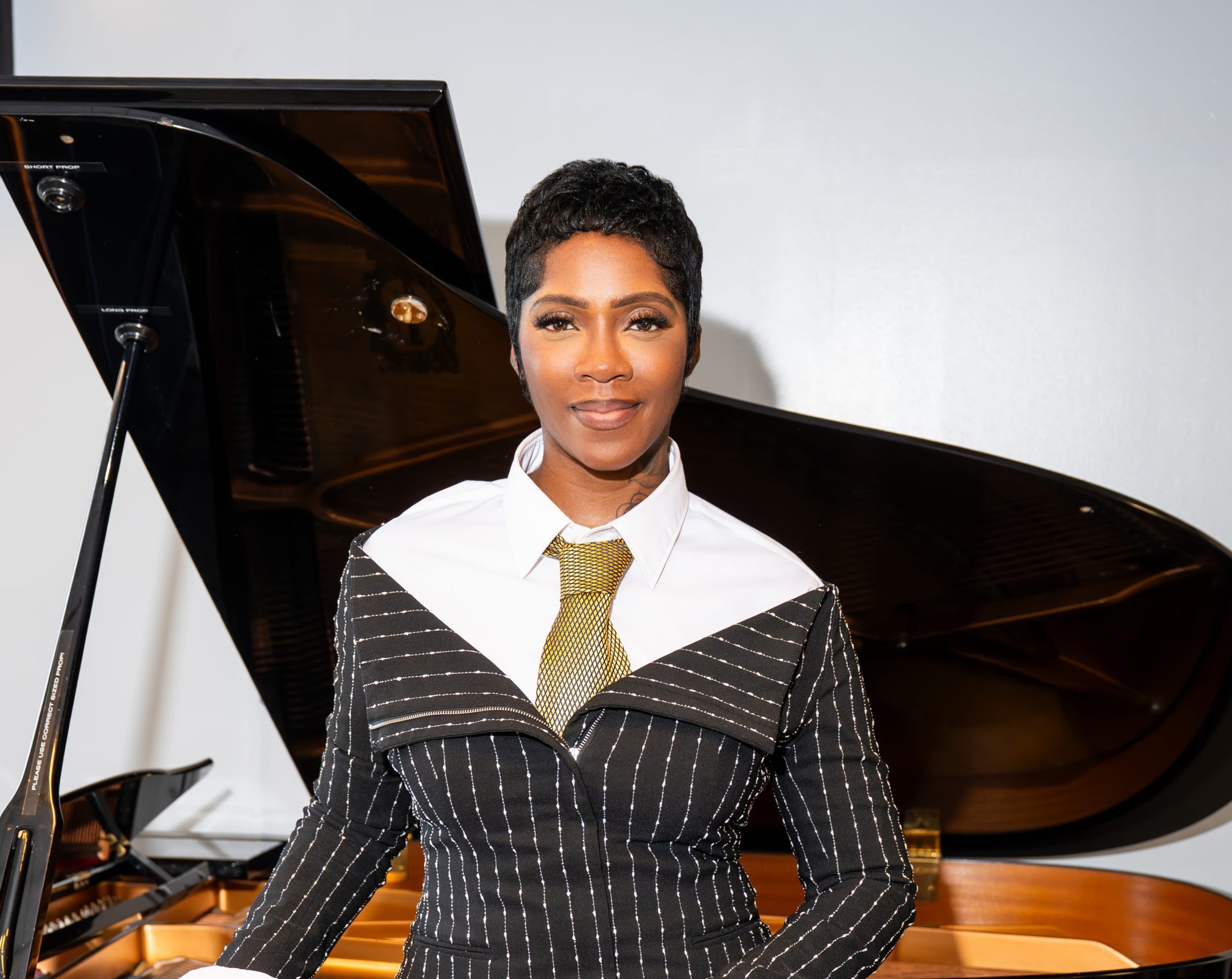
In Partnership With Berklee College Of Music, The Queen Of Afrobeats Is Bridging The Gap Between Global Education And The Raw Genius Of The Continent’s Next Generation
As worldwide interest in African music reaches a fever pitch, the conversation has largely centered on the infectious rhythms of Afrobeats and the undeniable groove of Amapiano. Yet, beyond the charts and viral dance challenges, there is a growing need for structural and educational frameworks to sustain such a massive cultural shift. Tiwa Savage, a legend who has spent over a decade at the forefront of the continent’s sonic export, is looking to provide exactly that.
Tiwa’s journey is one of full circles. Long before she was the “Queen of Afrobeats,” she was a student at the prestigious Berklee College of Music, honing a craft that would eventually make her a global icon. Now, through the Tiwa Savage Music Foundation, she is bringing that world-class pedigree home. Her inaugural initiative, “Berklee in Nigeria,” isn’t just an import of Western theory; it is a meticulously designed bridge. For four days this April, 100 of Africa’s most promising creators will gather in Lagos to fuse elite technical training with the raw, informal “street” brilliance that makes West African music move the world.
Tiwa isn’t just offering a masterclass; she’s architecting an ecosystem. From tackling the legal complexities of AI and digital ownership to creating scholarship pathways that bypass traditional academic barriers, she is ensuring the next generation of African talent is as business-savvy as they are creatively gifted. It is a shift from being a beneficiary of the system to being its primary benefactor.
For iMullar, we caught up with Tiwa Savage to discuss the philosophy behind the program, the importance of protecting African intellectual property, and her vision for a continental footprint that outlasts the final note of a showcase.
The following Q&A has been slightly edited for length and clarity.
You’ve often spoken about how your time in Boston shifted your perspective. Since this program brings Berklee to Lagos, how have you adapted that world-class curriculum to ensure it respects and integrates the unique, often informal “street” brilliance of West African musical traditions?
When I was at Berklee, one of the most powerful things I learned was that the methodology, the way you think about music, how you dissect it, how you apply theory to feel is transferable across any genre, any culture, any tradition. The framework doesn’t erase your roots; it deepens them.
What we’re doing in Lagos is not importing an American curriculum and dropping it into Nigeria. We’re using Berklee’s methodology as the foundation and building on the rhythmic complexity of Afrobeats, the storytelling traditions of West African music, and the way our producers layer sound in a way that’s uniquely ours. The classes are to assist in building creative vocabulary, surveying styles, rhythmic feel, groove, and those conversations will be rooted in what our students already know and live. Berklee’s professors are coming here. They’re going to be in the room with young Nigerians. That exchange goes both ways, and that’s the point. We’re not asking our students to abandon the informal brilliance that makes West African music move the world. We’re giving them the tools to understand why it moves the world and to take it even further.
With only 100 slots and “highly selective” criteria, how are you identifying talent that might have the raw creative genius but lacks the formal portfolio usually required by elite institutions?
This is exactly why we designed the application process the way we did. We’re not asking for academic transcripts or formal music qualifications. What we’re asking for is a two to three-minute video, recorded in the last six months that shows us your performance skills. What we’re looking for is the thing you can’t fake: genuine talent and drive.
The eligibility bar is deliberately accessible. You need to be at least 18 and have been playing your instrument or singing for at least one year. It’s intentional because every person deserves to be in this room as much as anyone with a polished portfolio. What this selection process is really asking is: do you have something real? If you do, we want to see it. A hundred students will be selected from across Africa. And what we’re really looking for is potential, the kind that doesn’t always come with a formal presentation. That’s the whole premise of bringing Berklee here rather than asking people to go there.
Short-term intensives often provide a “spark.” What structural support exists within the Foundation to ensure a producer or songwriter from the April cohort doesn’t hit a dead end once the Berklee instructors fly back to the States?
What we’ve built into this programme is intentional continuity. Every participant performs in a final showcase that’s not just a nice closing ceremony, that’s your first real professional experience, and a piece of evidence of what you can do. For standout participants, it doesn’t end there. Selected students will receive tailored guidance on advancing through Berklee’s in-person and online programmes. Scholarship awards will also be presented to recognise exceptional talent and open doors to further training. The goal is that a young creative who goes through this programme in April 2026 can still draw on the Foundation’s resources, community, and partnerships in the future and beyond. We’re not here to give people a four-day spark and then disappear. We’re here to build something that lasts for the students and for the ecosystem they become part of.
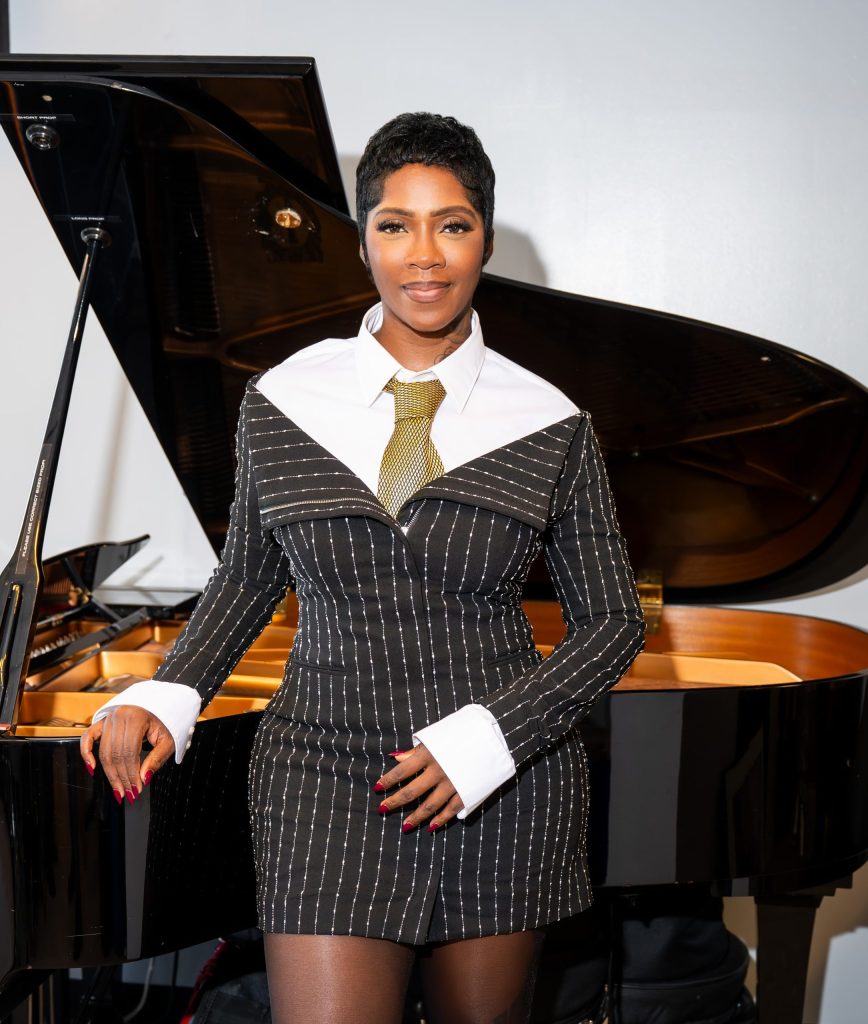
As an artist whose voice is globally recognizable, will the Foundation’s curriculum cover the legalities of voice modeling and digital ownership for the next generation of Nigerian artists?
This is one of the most urgent conversations happening in the music industry right now, and it would be a disservice to our students not to address it. The professional lectures and toolkit module exist precisely to tackle the realities of the current music landscape and that landscape includes AI, voice cloning, and digital ownership in ways that weren’t true even five years ago.
As an artist, I understand this personally. Your voice, your sound, and your style are your most valuable assets, and the legal infrastructure to protect them is still catching up with the technology. Part of empowering the next generation of African creatives is making sure they understand intellectual property, digital rights, and how to protect what they create. We want them to leave this programme not just as better musicians, but as better-informed professionals who know the value of what they own and how to defend it.
You’ve highlighted entertainment lawyers and music therapists. Is there a plan to incentivize the Nigerian private sector or government to create more jobs for these specialized roles once your Foundation finishes training them?
The Foundation’s long-term vision is ecosystem development which means we’re not just producing trained professionals in isolation; we’re working to help build the structures that will employ and sustain them. The music industry needs lawyers who understand entertainment law, engineers who understand digital production, executives who understand global markets. Those are high-skill, high-value jobs, and Nigeria needs to be building the infrastructure to support them. We are actively building strategic partnerships with organisations that share our vision. The Berklee collaboration is our flagship, but it is the beginning of a much wider conversation. Government engagement, private sector investment, and industry partnerships are all part of the roadmap. The work takes time, but it’s work we’re committed to.
While the program is tuition-free, the burden of travel and Lagos accommodation remains on the student. Is the Foundation looking into “Satellite Hubs” or digital streaming versions of these workshops for creators in regions who cannot afford the trip to the capital?
The programme is fully funded there is no tuition cost and right now travel and accommodation are real barriers for young creatives from rural areas or from other countries on the continent. We haven’t resolved that fully but what I can say is that accessibility across Africa is central to the Foundation’s mission. Nigeria is the debut, but this programme is intended to be the beginning of a continental footprint which in turn reduces the geographic barrier for future cohorts
You are moving from being a “beneficiary” of a scholarship to a “benefactor” of an entire system. How does this shift change the way you approach your own recording career? Does the “Tiwa Savage” brand now have a different responsibility when signing its own talent or producers?
When you’ve been given access that changed your life, you carry a responsibility to think about who comes after you. That’s not a burden, it’s a privilege. I chose to put my name on this Foundation because I wanted my commitment to be permanent and visible. This isn’t a separate initiative from who I am as an artist, it’s an extension of it. The values that drive the Foundation’s excellence, access, and investment in the full creative ecosystem those are values I want reflected in everything I do.
Follow @theimullar on Instagram and X(Twitter) for more.