Written By Piway Loko.
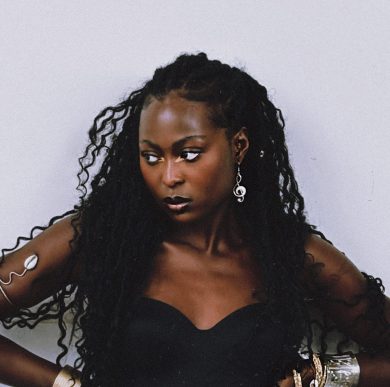
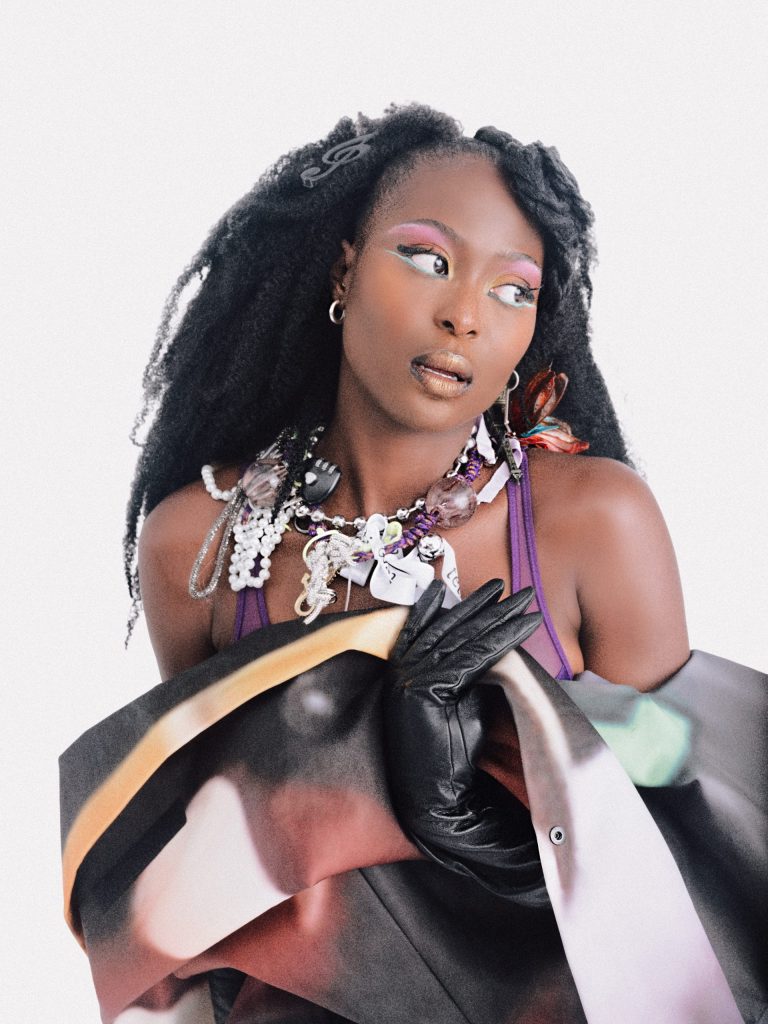
French artist of Ivorian heritage Ruthee has progressively built an artistic identity where R&B, Soul, Pop, and African influences coexist. At the centre of it all remains her voice, the element she considers the true common thread throughout her music. Following sold-out shows at La Boule Noire and New Morning, Ruthee has now entered another defining chapter. Her new EP, ‘Juste avant l’étincelle’, which arrived on October 16, carried by the unexpected momentum of “Zoblazo”, a joyful record deeply connected to her Ivorian roots.
For iMullar, Ruthee opened up about growing alongside her music, the story behind “Zoblazo”, her relationship with Côte d’Ivoire, and the creative process behind ‘Juste avant l’étincelle…’.
This interview is edited for clarity and length.
Your music moves through very different colours. How would you describe Ruthee’s sound today?
For a long time, not having one specific style scared me. People would say, “We don’t know if we should listen to you to dance or to cry.” At first, that frightened me. Then I thought: maybe that means I’ve won. My music goes beyond boxes. I’m trying to translate what is in my heart and my head without asking myself too many questions. The common thread is my voice. My placements and production can change, but I don’t think the music behind you should ever blur what you are trying to say. Whether it’s Afro, piano and vocals, or even Jersey, as long as I know why I’m doing it and what I want to say, I can express myself over any type of production.
Singing has also been part of your life for a very long time. Where did that musical foundation come from?
I always joke that I’ve been singing since I came out of my mother’s womb. But genuinely, I’ve been singing for as long as I can remember. I started through church, worship songs, birthdays, and family moments. Music has always been part of my life; my mother remembers me constantly singing when I was young. I had two CDs, Jessie J and Beyoncé, and something to play them on. Those were some of my first direct connections to music. Later, my references expanded. Adele, Bruno Mars, Ari Lennox… I’ve always been particularly attracted to vocalists. Tori Kelly was also very important to me. When I was around twelve, I was learning some of her early covers on guitar. I’ve always loved singers with strong vocal identities and real technique.
How different is the Ruthee of today from the artist who started releasing music a few years ago?
I’ve grown with my music. As my life has changed, naturally have the things I write about. Love is still central to my music because it has always driven my musical life, but my lyrics, placements, and how I use my voice have evolved. I wouldn’t necessarily call it change because the foundation is still the same. I would call it growth. My process is also completely different. Before, I wrote alone in my bedroom, recorded everything on my phone, and then went into the studio knowing exactly what I wanted to do. With this project, I opened myself up a little bit more. For the first time, I let people help me write and build the songs. People like Sika, Oscar, and Daisy came in and brought their own magic into mine. I create directly in the studio now too. “Zoblazo”, for example, was written there, whereas before I really needed to be alone first. I’ve also learned to let songs breathe. Before, I would record something and think it was finished immediately. Now I can leave the studio, wait a few days, listen again, and realise something needs to change. Today, giving myself that perspective has become essential.
You’re known for your melodic R&B and Soul sound. With “Zoblazo”, we discover another Ruthee, over a dance-driven rhythm that revisits an Ivorian classic. What was the intention behind the track?
The funny thing is that we never went into the studio thinking, “Let’s make a Zoblazo song.” The producer created this bassline, and its warmth immediately reminded me of a family wedding where everybody was dancing with white towels. I literally called my mother and asked her, “What was that song everyone was dancing to at Jessica’s wedding?” She told me to call Jessica, so I did, played it to the guys in the studio, and everything developed naturally from there. At the end, we were saying “Zoblazo, Zoblazo…” almost as a joke, and it became the song. For me, it is really about transmitting my heritage. “Zoblazo” was actually the last song I made for the EP. I have spent almost a year working on this project, sometimes spending days on individual songs, and then we made this one very quickly, and it became the song people connected with first. That taught me something about simplicity. I love complexity in music, so there was also this fear of people expecting everything else to sound like “Zoblazo”, but it’s my responsibility to show them I can take them somewhere much more R&B and remain the same artist.
The reaction to this song has been crazy. At one point, we had around 20,000 TikTok videos in two weeks, yet we never made it thinking about TikTok. My life hasn’t completely changed, but opportunities are coming. I always say: “The doors aren’t open yet; the doors are opening.”
Tell us about the live version of “Zoblazo”. How did that version come together?
The idea actually came from Lea Esmaili, my artistic director, photographer, and one of my best friends. Live music is probably even more important to me than the studio. I think I’m the type of artist you can discover on stage and then listen to afterwards. The stage makes me feel alive, so my team knew we needed to highlight that. The session came together very quickly. We had the idea, called everybody, and made it happen within about a week. Honestly, it didn’t feel like work. You’re telling me I can bring my friends into a studio, stand in the middle and sing while everybody around me enjoys the song? That’s not work to me. We deliberately didn’t add a full band either. For this song, the people’s warmth was enough. The people were the instruments. Their energy was the music.
“Zoblazo” has also connected you with a wider African audience. Do you want your Ivorian heritage to remain present in your music?
I’ve always tried to include it. Both of my parents are Ivorian, and I’m extremely proud of where I come from. That’s why I put it into my music. I try to learn bits of Dioula here and there, because for me, transmission and heritage are everything. If I can’t express it perfectly through language yet, then I can express it through music. I’m Ivorian, and I’m proud of it. “Zoblazo” is another way of saying: maybe she doesn’t live there, but she knows where she comes from.
Why did you call the project ‘Juste avant l’étincelle…’?
For me, EPs are almost like business cards. You get to explore different parts of yourself before eventually putting everything together on an album. If I had to name two musical foundations that made me who I am today, they would be Afro and R&B. ‘Tout brûle sauf moi’ let me explore one side, and now ‘Juste avant l’étincelle’ feels much more connected to my R&B side. Later, the album will bring everything together. There’s also clearly something between me and fire! ‘Tout brûle sauf moi’, now ‘Juste avant l’étincelle’… But warmth is important to me. I think my music is warm. And the title is really about being at that precise moment before everything happens. It’s the last project before a brand-new musical chapter.
Wamen is the only featured artist on the EP. Why her?
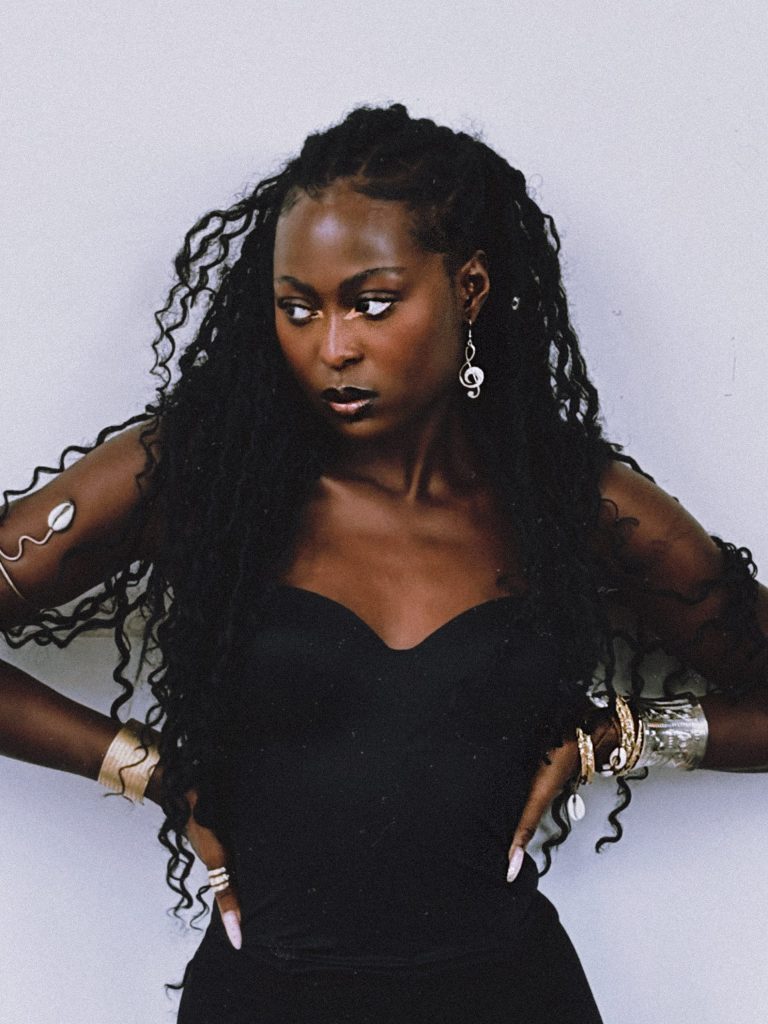
Wamen is my musical soulmate. She is one of the most beautiful people I’ve met. Music is incredibly intimate, so you cannot work with everybody. Her voice, her softness, her music, and who she is as a person have brought so much into my life. Our song speaks to some of the struggles that come with being an artist. She came to me and basically said, “I love this song. I wrote my verse because I know exactly what you’re talking about.” Today, she’s genuinely my sister. If something is wrong, if I have doubts, if I have good news, I call her. Beyond the person I know, Wamen the artist genuinely makes me feel good.
One song that particularly stood out while listening to the EP was “Laisse tomber”. What is the story behind it?
That makes me really happy because I literally doubted that song! It’s one of my favourite tracks. I think it was the first song where I understood what colour this project was going to have. Vocally, it was important because I love proving what I can do. I love singing, riffs, and runs. When you know how to sing, you constantly want to show it. With this song, the idea was: stop proving and just sing. Sometimes holding back makes the moment when you finally open your voice much stronger. We imagined the song like a flower gradually opening. And it’s actually about friendship rather than romantic betrayal. It is still love, because when someone leaves and it hurts, there was love there. It is about reaching that place where you’ve forgiven someone, but you haven’t forgotten.
You’re performing at La Gaîté Lyrique on December 17. What can people expect from this next chapter?
An unforgettable show. I’m very particular about venues because I don’t want to follow a route just because one room traditionally comes after another. I want places with soul. At La Gaîté Lyrique, we have 360-degree screens and the opportunity to create something immersive. This time, I don’t want a full band. Two backing vocalists will also play guitar, but visually I want space. The screens, the lights, my girls, my voice, and I will make the show. I want beautiful moments, great guests, and strong vocal performances. I just want people to remember it.
Finally, what should we wish for Ruthee?
Wish me huge things. Wish me the world. Health, great collaborations, big venues, a lot of love, and the same people around me. We’re not changing the team.
Follow @theimullar on Instagram and X(Twitter) for more.