For two decades, the evolution of African entertainment has been defined less by its spotlight and more by the invisible scaffolding holding it up. While the world continues to marvel at the global ascendancy of Afrobeats and African cinema, the structural mechanics, the legal frameworks, cross-border intellectual property protections, and physical infrastructure are where the real battles for creative sovereignty are fought.
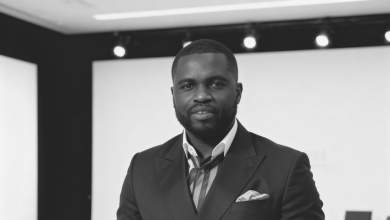
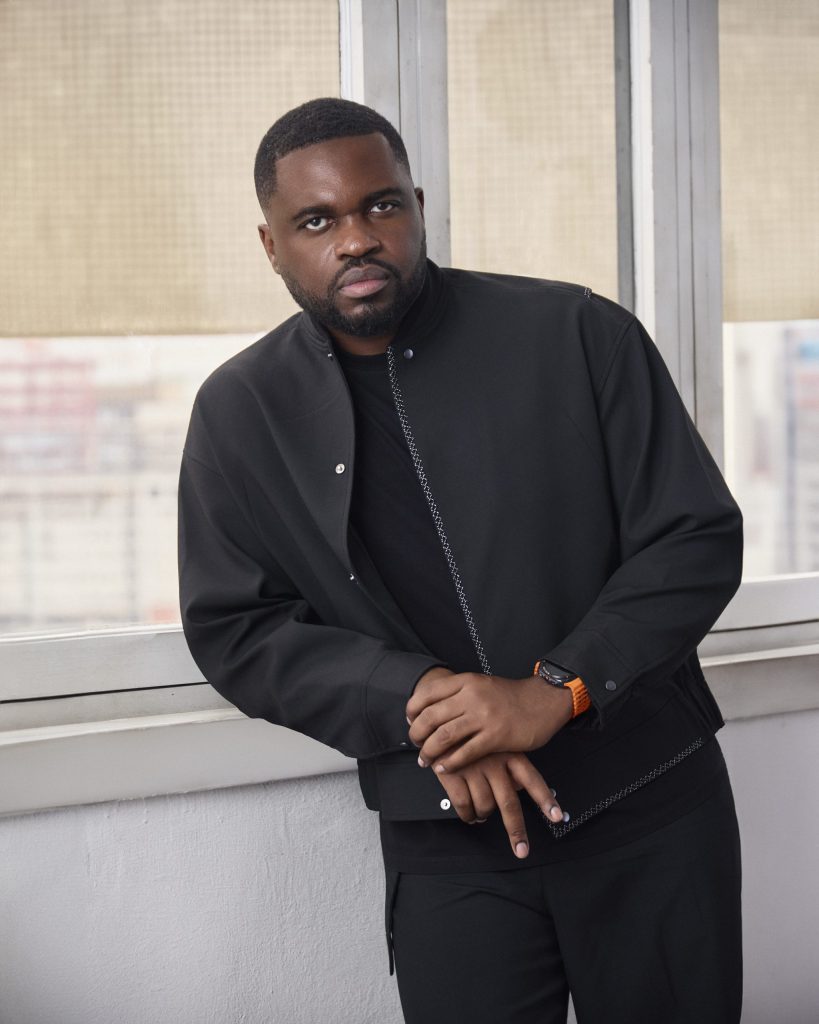
Few people understand this balance quite like Solomon Sonaiya. A legally trained entertainment executive, investor, and co-founding architect behind Livespot360, Solomon’s career spans the full spectrum of the continent’s creative transition. From navigating the early, lawless frontier of Nigeria’s modern music industry to producing world-class live experiences, financing film and television projects across the Atlantic, and working alongside global icons like Ms. Lauryn Hill, he has quietly built the machinery that allows African culture to operate at scale. Through initiatives like Entertainment Week Africa and state-of-the-art facilities like the Entertarium, his focus remains sharp: ensuring that Africa’s creative talent gets the permanent, institution-grade infrastructure it deserves.
For iMullar, Solomon speaks on the evolution of our ecosystem: unpacking the legal friction, investment realities, and strategic decisions shaping the next era of African creative independence.
Can you introduce yourself to our readers, who is Solomon Sonaiya in the African creative ecosystem?
I’m Solomon Sonaiya. I am legally trained, but most of my career has been spent building businesses across entertainment, media and culture. As a founding director of Livespot360, I have helped build an integrated creative company spanning live experiences, television and content production, digital, talent, venue infrastructure and platforms such as Entertainment Week Africa. My work also extends into music and international projects with artists such as Ms. Lauryn Hill.
The common thread across everything I do is trying to turn creative energy into sustainable businesses, intellectual property and institutions. Africa is rich in talent and cultural influence. The opportunity now is to build strong systems that can finance, protect and distribute that talent while retaining more of the value it creates. I see my role as helping to build those systems and strengthen the wider creative ecosystem.
How do you balance the rigid protection of intellectual property with the highly collaborative, organic nature of African studio culture without stifling a creative’s natural process?
The creative process does not need to be rigid for the protection around it to be rigorous. The studio should remain a space where people can experiment and create freely. However, everyone entering that space should understand the basic rules: how contributions will be recorded, how splits will be agreed, what happens to unreleased material and who has authority to approve a release or commercial use.
In the case of music creation, this is where proper A&R and session management become extremely important. A&R is not only about choosing songs or finding talent. A good A&R function manages the creative process: who is in the room, what each person contributes, what the intended outcome of the session is, and how the resulting work will be developed and commercially exploited. People should be able to create freely, but they should also understand what may happen on the business side if the work is released.
That is particularly important for independent and self-managed artists, because there may be no manager, label or publisher keeping proper records on their behalf. They need simple systems: a session brief, contributor log, split sheets, version control, accurate metadata and clear agreements around masters, publishing, samples and unreleased material. These do not have to interrupt the session; they can be handled by a designated session manager or immediately afterwards, while everyone’s contribution is still clear. The same principle applies to film and content. Directors, writers, performers, composers,photographers and editors may collaborate organically, but contributor agreements, releases, credits, underlying rights and ownership of the final footage still need to be documented.
Creatives should understand not only what they are making, but the possible commercial outcomes of what they are making. Proper management protects the work without suffocating the process.
At what point in a major cross-cultural rollout do you decide that an international standard of production needs to be abandoned to accommodate local operational realities?
The first thing we should ask is: what do we mean by “international standards,” and who determines them? There are objective technical requirements that must be respected. If you are producing content for Netflix, television or theatrical distribution, for example, there will be specific requirements relating to picture, sound, delivery formats and safety. Those are measurable standards. But beyond technical compliance, “international standard” is often used as shorthand for a particular Western idea of what polished or professional work should look like.
The success of user-generated content, YouTube streamers and social media has challenged that definition. Some of the world’s most influential content is raw, immediate and produced without traditional infrastructure. Audiences increasingly respond to authenticity, originality and relevance, not simply production expense or quality. AI is also making sophisticated creative tools more widely available, further levelling the production landscape.
I therefore do not believe we should constantly aspire towards somebody else’s definition of an international standard. We should establish and raise our own standards, grounded in pride in our cultural and creative identities. That means being authentic, intentional and paying close attention to detail and quality, whatever the scale or format of the production. Local reality should never become an excuse for compromising on quality. But neither should international acceptance require us to dilute our identity or imitate how work is produced elsewhere. The ambition should be to create work that is so culturally assured and well executed that it does not simply meet existing international standards, it helps establish new ones.
What is the most common legal or structural oversight you see African creative-tech startups make when preparing for institutional funding?
The most recurring oversight I see during our deal room and innovation labs at Entertainment Week Africa is that founders build a compelling product without building the proper company around it. Many creative-tech startups are founded by creatives, which is a real advantage. They understand the problem first-hand and can develop solutions that genuinely serve themselves and their peers. However, that closeness to the creative problem does not automatically produce an investment-ready business. Founders may concentrate on the idea, platform and pitch without considering what an institutional investor’s legal, risk and compliance teams must verify. The intellectual property may not have been assigned to the company, ownership arrangements may be informal, financial records may be incomplete, or the business may depend almost entirely on the founder.
No matter how strongly the investment team believes in the idea, those requirements cannot simply be waived. Funding readiness therefore means establishing clear ownership, reliable accounts, proper contracts, appropriate governance and regulatory compliance from an early stage. The issue is rarely a lack of creativity. It is the failure to translate a strong creative insight into a structured and investable institution.
How has working extensively with a legacy artist like Ms. Lauryn Hill shaped your philosophy on how African artists should protect and archive their personal histories in real time?
Working with Ms. Lauryn Hill has taught me that legacy cannot be manufactured; it grows from an unwavering commitment to authenticity. Most people follow trends, but very few set them. Without chasing accolades or engineering clout, Ms. Hill remains relevant almost three decades after releasing her only solo studio album. Technology now allows artists to document their histories in real time through livestreaming, blogging and vlogging. But African artists must see these materials as both cultural records and valuable assets. Their histories can later support documentaries, concert films, books, exhibitions, anniversary projects, merchandise, licensing and educational content.
For that value to be realised, the archive must be owned, organised and rights-cleared. Artists need original high-quality files, dates, credits, metadata, contributor releases, clear ownership and independent backups. They should also retain their audience data rather than leave everything under the control of social media platforms. Legacy grows naturally from the work. Proper archiving ensures that artists can tell their own stories and participate in the cultural and commercial value those stories create.
When designing large-scale infrastructure like Entertainment Week Africa, what is the most unpredictable variable in making a multi-purpose venue future-proof?
I would make a slight distinction: Entertainment Week Africa is the wider ecosystem platform, while the Livespot Entertarium is the physical multi-purpose venue supporting experiences of that scale. The most unpredictable variable is future demand—how audiences, creators and producers will want to use the space in five or ten years. Cultural formats, audience behaviour and commercial models can change much faster than a physical building. That is what we have tried to address with the Livespot Entertarium. Rather than designing it around a single format, we built it for adaptability, with modular spaces, adjustable capacities, flexible staging, acoustics and rigging. This allows it to accommodate concerts, film and television productions, exhibitions, conferences and other emerging formats. The objective is not to predict the future perfectly, but to create infrastructure that can respond to change without requiring a major rebuild.
What is the hardest thing to translate when pitching the tangible financial value of African creative IP to risk-averse Western investors?
The hardest thing to translate is the gap between cultural value and financially legible value. African music, fashion and storytelling can have enormous global influence, but influence alone is not what a traditional investor can underwrite. They want to see clear ownership, reliable revenue histories, enforceable contracts, predictable collections and an identifiable route to liquidity. In many cases, the demand already exists, but the infrastructure capturing that demand is fragmented. Revenue may be spread across territories, platforms and collecting systems, while ownership and metadata are not always sufficiently clear. That opacity is then interpreted as risk.
The challenge is to convert cultural relevance into bankable evidence: clean chains of title, auditable earnings, properly administered rights and repeatable distribution. African IP is not inherently too risky. Too often, its value is simply not documented or structured in a language that institutional capital can readily understand.
How do you structurally protect emerging creators during environments like the EWA SoundLab camps?
We go into the SoundLab with the intention of ensuring that every creator understands their rights. Knowledge is one of the strongest forms of protection, so participants should have a basic understanding of how intellectual property works, including publishing, master rights, credits, splits and the possible commercial outcomes of what they create. Although the camp itself is focused on creativity, we establish clear expectations and ground rules from the beginning so that everyone is on the same page. Contributions and metadata can be recorded during the sessions without turning the creative space into a negotiation. Once the work is completed, the formal process of agreeing splits, clearing rights and deciding whether and how the material will be released can take place separately. Creators should have sufficient time to understand any proposed agreement and seek advice where necessary. Participation in the camp should never automatically transfer ownership. The objective is to create opportunity while ensuring that creators make informed decisions about their work and long-term rights.
What industry advice have you had to completely unlearn to scale across African and Western markets?
I have had to unlearn the idea that scaling means imposing one rigid process across every market. Structure is important, but process cannot become dogma. Western markets often operate through established systems, clearly defined roles and formal procedures. Many African markets can be more fluid, relationship-driven and responsive to changing circumstances. Simply transferring the same operating model from one market to another does not always work. At the same time, informality has its limits. If everything depends on relationships, improvisation or the founder’s direct involvement, the business becomes difficult to scale. The lesson has been to standardise the principles and desired outcomes, while adapting the process. Quality, safety, rights protection and accountability should remain non-negotiable, but local teams must have flexibility in how they achieve them. Scale does not always mean uniformity. It means building systems strong enough to remain consistent, but flexible enough to work in different environments.
What gap did you discover between what creative founders think investors want and what actually de-risks a deal for a tech fund?
Creative founders often pitch possibilities, while investors are trying to understand predictability. Founders naturally lead with vision, cultural relevance, audience numbers and the size of the opportunity. Those things are important, but they do not necessarily de-risk an investment. A technology fund will also want evidence of product-market fit, repeatable revenue, customer retention, defensible technology, realistic margins, clear IP ownership and a team capable of executing the plan. Another common problem is presenting a relationship-driven service business as though it were already a scalable technology platform. Investors need to understand which part of the company can genuinely scale without every transaction depending on the founder’s personal involvement. The Deal Room reinforced that capital does not invest in creativity as an abstraction. It invests in a properly structured opportunity where the risks, ownership, revenue model and use of capital can all be clearly understood.
How do we move from celebrating global consumption of African music to ensuring that the core economic value stays on the continent?
We must own and operate more of the infrastructure surrounding the music. That includes rights administration, publishing, distribution, catalogue financing, ticketing, payment and settlement systems, venues, production facilities, touring logistics, merchandise and audience data. At present, African talent may create the cultural demand while much of the recurring economic value is captured elsewhere in the chain. Physical infrastructure matters as much as digital infrastructure. We need stronger regional touring circuits, dependable venues, equipment and freight networks, and more workable systems around visas, customs and cross-border payments. We also need African capital that understands creative assets and is willing to finance them over the long term. It is about ensuring that African creators and companies have meaningful ownership and participation within those partnerships. Global consumption should result in stronger African institutions, not simply more African visibility.
What does the future hold for African creatives and the ecosystem as a whole?
I am very optimistic, but I do not think the outcome is automatic. African creativity has already proven its ability to travel and influence global music, fashion, film and popular culture. The next stage is moving from exposure to ownership, from individual success stories to repeatable pipelines, and from celebrated cultural moments to lasting institutions. I believe we will see more creator-owned catalogues, specialised creative funds, regional touring networks and more robust local markets, African-led media and music companies, stronger rights infrastructure and new financing models built around intellectual property. Technology and AI will reduce some barriers to creation and distribution, but they will also make questions of ownership, attribution and consent even more important. The defining question is no longer whether African culture can travel. It is whether we can build the companies, platforms and institutions around it quickly enough to ensure that African creators and communities participate fully in the value they generate.
Follow @theimullar on Instagram and X(Twitter) for more.